

Becoming a practical nurse in Canada is both rewarding and challenging; it requires compassion, dedication, and successful completion of the Canadian Practical Nurse Registration Examination.
This exam determines whether you’re ready to deliver safe, competent, and ethical nursing care in real-world settings. Whether you’re a recent nursing graduate or preparing for a retake, effective preparation is the key to success.
In this guide, we will look at the best CPNRE exam tips so the appearing candidates can study smarter, manage stress and walk into the test centre feeling ready. From study techniques to recommended resources to exam-day strategies, Sulcus Learning is your one-stop solution to pass your CPNRE exam on your first attempt.
Understanding the CPNRE Format
Before you begin preparing for your nursing licensure exam, it’s essential to understand what the Canadian Practical Nurse Registration Examination (CPNRE) is designed to measure. Administered through Yardstick/Meazure Learning, the CPNRE is a standardized assessment that evaluates whether candidates demonstrate the entry-level competencies required for safe, ethical, compassionate, and competent practical nursing practice in Canada.
This exam is not just another test—it is a national assessment tool used by practical nurse regulatory bodies across Canada (except Ontario and British Columbia) to determine whether a candidate is ready for professional practice.
The CPNRE is a fixed-form, computer-based examination that includes both traditional multiple-choice items and scenario-based questions. These items are specifically developed to measure clinical reasoning, decision-making, client safety, and the practical application of foundational nursing knowledge.
What to Expect in the CPNRE
- Duration: 4 hours
- Number of Questions: Approximately 165
- Format: Multiple-choice and scenario-based questions focused on client care, critical thinking, ethical judgment, and safe nursing practice.
Understanding the structure and expectations of the CPNRE allows you to create a targeted study approach, strengthen time-management skills, and build the confidence needed to navigate complex nursing scenarios. With the right preparation, you can walk into the exam feeling calm, focused, and fully ready to demonstrate your readiness for practical nursing in Canada.
Knowing the CPNRE Blueprint
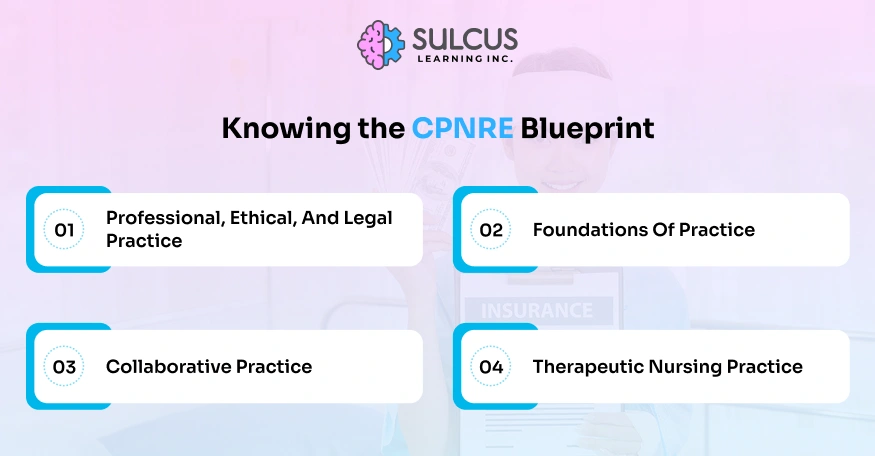
Think of the CPNRE Blueprint as your official study map. It describes what subjects and skills will be tested. The key areas included in the CPNRE blueprint are:
1. Professional, Ethical, and Legal Practice
This evaluates how LPNs uphold professional standards, maintain client confidentiality, demonstrate ethical judgment, and practice with accountability within provincial regulatory expectations. It challenges your ability to be a critical thinker but respectful of clients’ rights, safety and dignity.
2. Foundations of Practice
In this, you’ll be tested on fundamental nursing knowledge, includes anatomy, physiology, pharmacology, infection control and health promotion. This space is evidence that you are getting a strong base to provide safe and competent care.
3. Collaborative Practice
This area evaluates how LPNs communicate and collaborate within the interprofessional healthcare team. LPNs work within their autonomous and collaborative scope of practice and consult with Registered Nurses, physicians, and other professionals when client needs become more complex or unpredictable.
4. Therapeutic Nursing Practice
This is where clinical judgment comes in. This concentrates on the provision of client care, assessment, planning, intervention, and evaluation to deliver client-centred, safe, and goal-directed nursing care. In this stage, you will be tested on your application of the nursing process to promote healing, comfort, and optimal health potential.
When you review the exam blueprint, you’ll see exactly where to spend your time and effort. Don’t overlook this, it’s one of the most intelligent CPNRE study tips you can follow.
Top Study Tips for the CPNRE
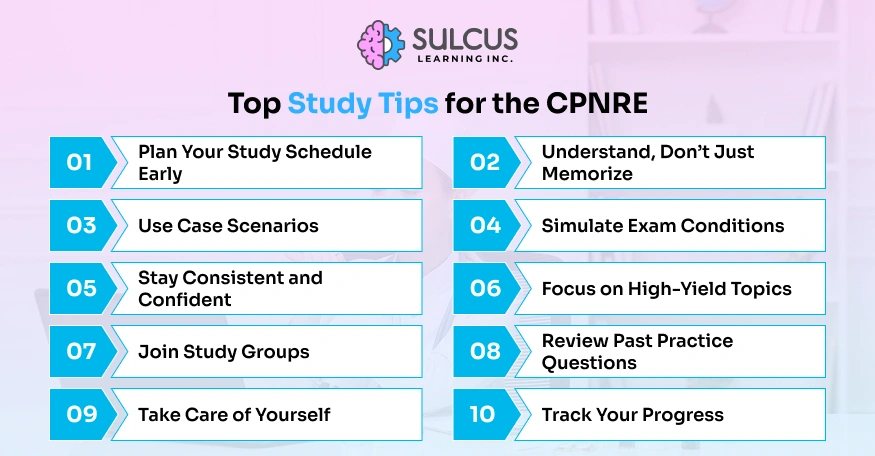
This is where you really start to prepare! These CPNRE tips can give you that confidence boost and enhance the quality of your prep!
1. Plan Your Study Schedule Early
The best way to prepare for the CPNRE is by creating a structured study schedule. Break it down into bite-sized chunks and dedicate time each day. Consistent daily study is far more effective than just studying the night before.
2. Understand, Don’t Just Memorize
Focus on understanding the nursing process, not memorizing it. The CPNRE tests your ability to apply what you know. Ask yourself, “How would I handle this clinical situation safely and effectively?”
3. Use Case Scenarios
Practice with scenario-based questions regularly. These help develop critical thinking, clinical judgement and decision making. Put theory into practice to test your comprehension and prepare you for the exam format.
4. Simulate Exam Conditions
Practice with timed full-length CPNRE mock tests. Conducting yourself as you would in actual testing conditions will better prepare your focus, endurance and time management. It also reduces your anxiety and boosts confidence in approaching scenario-based questions.
5. Stay Consistent and Confident
Consistency is the key to preparing for the CPNRE. Confidence comes with regular study sessions, continual practice and trusting your nursing knowledge. This process reinforces critical thinking and your nursing exam preparedness over time.
6. Focus on High-Yield Topics
Focus on concepts that are identified in the CPNRE blueprint, such as professional standards of practice, client safety, and therapeutic nursing interventions. This study plan is task-based on high-yield areas, so you spend your time efficiently studying for the test.
7. Join Study Groups
Study with peers by joining nursing study groups. Discuss the problems you face, share solutions, and clarify difficult concepts. Studying together helps you actually learn; it brings a new perspective, keeps you motivated and ensures that together CPNRE prep doesn’t feel as hard.
8. Review Past Practice Questions
Regularly practice past CPNRE questions or official sample tests. This helps you identify knowledge gaps, solidify what you have learned, and become more familiar with the exam structure, thereby enhancing your confidence and ability to answer scenario-based questions.
9. Take Care of Yourself
Prioritize your sleeping pattern, diet and short break during your regular study time for your nursing exams. By maintaining physical and mental boosts, memory retention and focus allow you to have better learning effectiveness to remain alert and mentally prepared on exam day.
10. Track Your Progress
Keep a study journal or checklist to monitor your progress. Keep track of topics you have finished, identify weaker areas, and change your study plan accordingly. Frequent practice will ensure successful preparation, enhance confidence and reduce stress for the CPNRE exam.
Exam Day Strategies
After weeks of nursing prep, it’s time to finally time to put your knowledge and skills into action. The day of the CPNRE can feel overwhelming or very stressful, however, using these tips can make a significant difference in your confidence and performance.
- Arrive Early: Aim to arrive at the test centre an hour or so earlier. This allows you to settle in, get comfortable with the environment, and reduce any last-minute stress. “Do not rush as this will enhance anxiety and decrease concentration.
- Read Carefully: Be careful while reading the question. Look for keywords like most appropriate, first action, or priority. This cues you in choosing the best possible answer for each question based on clinical reasoning rather than guesswork.
- Trust Your First Instinct: Your initial choice is often correct. Dont stop and puzzle it out, as it can lead to errors.
- Keep an Eye on Time: Managing your time is crucial. Don’t dwell too long on any one question. Mark challenging questions and comes to revisit them later. Keep nothing on your mind, be cool, focused, and approach each question with confidence to make it work for you.
After the Exam
After that, click “submit”, take a deep breath, and you’re done with the CPNRE! Results are typically released within a few weeks by your provincial regulatory body.
If you pass, congratulations! You’re one step closer to beginning your career as a licensed practical nurse in Canada.
If you didn’t pass today, don’t be discouraged. Review your nursing exam performance, identify your weak areas that need improvement, and focus on passing CPNRE. With deliberate practice and appropriate strategies, you’ll be prepared to do your best the next time you take it.
Bonus Tips from Successful Test-Takers
One of the reasons Canada is so popular among nurses is its high standard of healthcare and professional opportunities. Many aspiring nurses aim to bring their skills to the country and succeed in the CPNRE.
Successful Canadian nurses recommend a few key strategies: understand nursing principles rather than memorizing definitions, practice critical thinking daily, use the CPNRE blueprint as your study guide, and stay calm, as confidence is half the battle.
To maximize your success, Sulcus Learning, the best platform for CPNRE exam preparation, offers expert-led resources, structured study plans, and realistic practice exams. With personalized guidance and progress tracking, it helps you study smarter, strengthen critical thinking, and approach exam day with complete confidence.

Conclusion
Passing the CPNRE on your first attempt is absolutely achievable. With structured preparation, smart strategies, and the right mindset, you’ll walk into the exam feeling ready for anything.
At Sulcus Learning, we’re here to support your journey toward becoming a licensed practical nurse in Canada—because your success is our mission.
FAQs
Q1. How long should I study for the CPNRE?
Ans. Most candidates study for 6–8 weeks, depending on their schedule and familiarity with nursing concepts.
Q2. Can I retake the CPNRE if I fail?
Ans. Yes, you can attempt the exam up to three times (depending on your province’s regulations).
Q3. Is the CPNRE difficult?
Ans. It’s challenging but fair. With the right CPNRE preparation tips, anyone can pass.
Q4. Are there any free resources for CPNRE prep?
Ans. Yes, you can find sample questions and blueprints on your provincial regulatory body’s website and at Sulcus Learning’s online resources.
Q5. What is a passing score for the CPNRE?
Ans. Scores are based on a competency-based standard, not a fixed percentage.

Harry Sagar
Passionate and detail-oriented leader at Sulcus Learning, dedicated to supporting internationally educated nurses in achieving their professional goals. With experience as a general practitioner, smoking cessation consultant, and licensed practical nurse, I combine clinical expertise with mentorship. Guided by the philosophy, “Your Success is Our Ambition,” I help nurses gain confidence, competence, and career-ready success.