

With the Canadian Practical Nurse Registration Examination (CPNRE) comes a lot of anxiety, especially knowing that your future as a Licensed Practical Nurse is on the line. The exam structure is competency-based, meaning your knowledge of the subject matter will be assessed. Given the detour and exam length, studying can be difficult.
That said, this CPNRE Prep Guide will focus on the most important aspects. You may be wondering how to begin studying for the CPNRE exam or how to find a suitable CPNRE prep course. This guide will discuss realistic, exam-focused, and structure-based involves Canadian different types of nursing exams. No fluff, just a proven strategy to stay motivated, study intelligently, and walk in ready for exam day.
Understanding the CPNRE Exam Content & Format
Before you open a textbook or attempt your first practice test, the most important step is to understand the CPNRE exam content & format.
The CPNRE is not a memorization exam. It is a competency-based nursing exam designed to assess how safely and effectively you apply nursing knowledge in real-world practice.
CPNRE Exam Structure at a Glance
- Non-adaptive exam format
- Multiple-choice questions, including case-based scenarios
- Questions mapped to entry-to-practice competencies
- Emphasis on clinical judgment, prioritization, and ethical decision-making
This means the exam tests how you think, not just what you know.
Many candidates struggle because they prepare as if it’s an academic test. In reality, the Canadian practical nurse exam assesses your ability to evaluate situations, select the safest intervention, and collaborate with the healthcare team.
Key insight: If your study plan doesn’t focus on application and reasoning, you’re preparing for the wrong exam. Effective CPNRE exam tips emphasize decision-making, client safety, and real-world nursing scenarios.
How to Start Studying for the CPNRE Exam
One question many students have is how to begin studying for the CPNRE without experiencing overwhelming uncertainty. The answer is often overlooked but relatively straightforward.
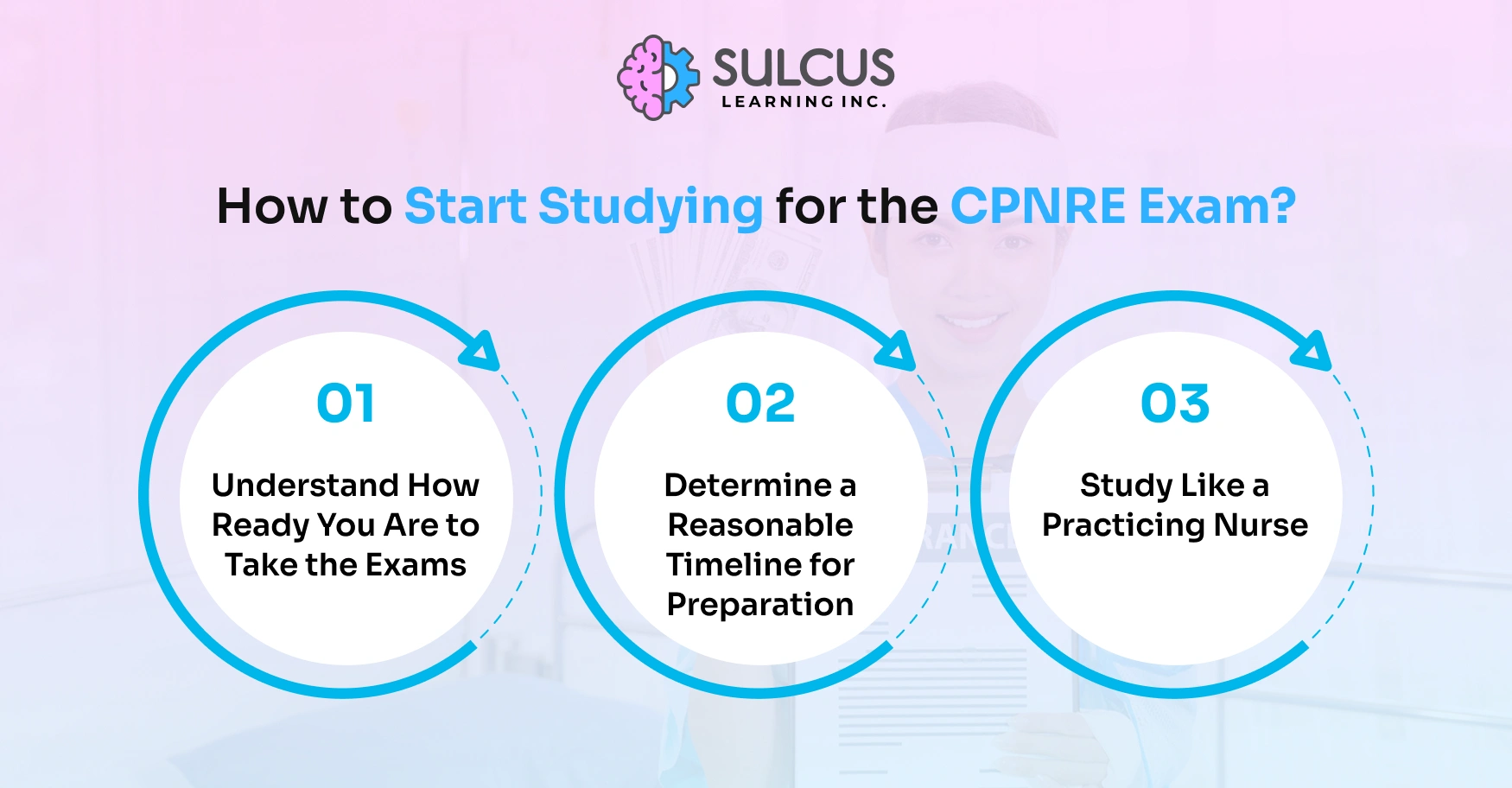
Step 1: Understand How Ready (or Unready) You are to take the Exams
Before you begin preparing for the CPNRE, compare your level of readiness to the entry-to-practice competencies for Canadian Licensed Practical Nurses (LPN). What are your strong areas and where do you have uncertainty with clinical decision making? Addressing your own clinical decision making with the nursing judgment question and educated guessing framework may help clarify your thought process. Doing a diagnostic assessment early on will help you establish a clear baseline for your exams and help you avoid unproductive studying.
Step 2: Determine a Reasonable Timeline for Preparation
A candidate’s timeline will take anywhere between 8-12 weeks of preparation for the exam and are along a spectrum of readiness. To move to a more competitive position on that spectrum, the candidate must maintain a consistent study schedule and use measurable data to monitor their progress. Cramming is not a good strategy to adopt for this exam.
Step 3: Study Like a Practicing Nurse
Consider safe, ethical, and competent client care as a Canadian Licensed Practical Nurse would. Instead of rote memorization of content, apply nursing knowledge to various clinical situations and to professional and interprofessional roles. This practice-oriented approach best aligns with CPNRE’s focus on assessing entry-level competencies in nursing practice.
Starting your preparation with a structured CPNRE exam guide helps turn uncertainty into clarity by focusing on readiness, clinical judgment, and consistent, practice-oriented study aligned with entry-to-practice expectations.
Creating a Personalized CPNRE Study Plan
Personalized study plans are critical for success on the CPNRE. Mastering the competencies and guidelines set by the Canadian Practical Nurses Association for credentialing new LPNs is vital to developing a successful study plan.
Instead of studying without guidelines, focus on the CPNRE competencies. The competencies emphasize clinical judgement, client safety, and professional accountability. These are the areas in which you will apply your knowledge through nursing situations. The Canadian nursing framework expects practical nurses to make sound, safe, and client-centered decisions while maintaining legal and ethical accountability. These are the areas that best reflect Canadian health care.
What an Effective CPNRE Study Plan Should Include
Combined, these factors provide structure, measurability, and alignment for preparing for the Canadian LPN registration exam.
- A study schedule built on nursing knowledge and competencies. For example, 1.5 to 3-hour sessions, 5 days a week.
- Weekly reviews that align with CPNRE frameworks and Canadian nursing competencies.
- Questions that reflect the CPNRE style to practice clinical judgement, prioritization, and safe decision-making.
- Practice exams that assess time management and endurance also help build confidence.
Together, these elements keep preparation structured, measurable, and aligned with the expectations of the Licensed Practical Nurse registration exam in Canada.
Study by Clinical Scenarios, Not Just Subjects
Instead of organizing your study plan by textbook chapters alone, structure it around realistic client-care scenarios, such as:
- Monitoring and administering medications safely.
- Professional and ethical decision making.
- Infection prevention and control.
- Health education, health promotion, and continuity of care.
This approach is similar to the CPNRE’s assessment of one’s ability to practice safely and competently in the Canadian health care system.
Pro Tip: Track your practice outcomes and reflect on them weekly to monitor your progress. Focus on improvement above all else, and you will be on the right track to prepare adequately for the CPNRE.
Choosing the Right CPNRE Prep Course & Study Resources
It’s important to know that not all prep materials are of the same quality. Selecting the best CPNRE preparation materials will have the greatest impact on your results.
What to Look for in a Quality CPNRE Prep Guide
- Questions that are structured in a way that is consistent with the exam.
- Questions that meet the Canadian nursing standards.
- Explanations that justify the correct answer.
- Analytics that track and assess performance, as well as a readiness indicator.
Avoid preparation materials that rely heavily old, outdated material or non-Canadian exam logic. CPNRE is different. Thus, your prep needs to be different. An online prep course that is tailored to Canadian candidates will help you study more efficiently, lower your stress, and increase your confidence for exam day.
How to Study for the CPNRE Exam Questions Effectively
Many candidates feel stuck despite investing significant study time. Meaningful improvement begins with understanding how CPNRE questions are constructed, what competencies they assess, and how clinical judgment is evaluated.
How CPNRE Exam Questions Are Structured
The CPNRE questions assess the candidate’s ability to demonstrate exam-entry level competencies for the Licensed Practical Nurse role in Canada. Questions assess your ability to demonstrate the following competencies:
- What is the safest course of action regarding the client?
- What is the most important nursing intervention that must be performed at this moment?
- What is the most appropriate action that falls within the scope of practice for an LPN, along with the professional responsibilities that accompany the practice of nursing at that level?
These questions on the exam are most likely level 2, requiring an understanding of the concepts and relationships that encompass the entire nursing process. Therefore, this exam is not meant to be passed by memorization of facts and details.
A Smart Strategy for Studying CPNRE Questions
To study effectively, follow a structured, judgment-based approach:
- Read the entire client scenario carefully, noting key details and changes in condition.
- Identify the primary client need, with a focus on safety and urgency.
- Eliminate unsafe, irrelevant, or out-of-scope options.
- Select the response supported by sound nursing judgment and Canadian practice expectations.
Repeatedly doing CPNRE practice questions, along with multiple-choice rationales, helps to improve your critical thinking and understanding as opposed to rote memorization. Therefore, you will not only remember the right answer, but you will also understand the reasoning behind it.
CPNRE vs NCLEX: A Key Study Difference
If you are learning to study for the LPN NCLEX exam, understanding the differences between the CPNRE vs NCLEX exam structures is essential. The NCLEX incorporates computerized adaptive testing. On the other hand, the CPNRE is not adaptive, and uses a fixed competency alignment format.
Therefore, when preparing for the CPNRE, the emphasis should be on the consistent application of a given competency, rather than on adjusting an answer based on competence. To be successful on the CPNRE, it is advisable to maintain a focus on competency alignment and clinical judgment.
Practice Tests & Performance Tracking
Practice tests are not optional in CPNRE exam preparation, highlighting the importance of mock tests & practice exams for readiness and confidence.
Why Mock Exams Matter for the CPNRE
A realistic CPNRE mock exam helps candidates:
- Build exam stamina and mental focus
- Improve time management under exam conditions
- Identify performance gaps across nursing competencies
- Reduce anxiety through repeated exam exposure
These benefits directly support CPNRE exam readiness by replicating the Licensed Practical Nurses exam in Canada.
Why Reviewing Practice Tests Matters More Than Repetition
Simply completing practice questions is not enough. Meaningful improvement comes from structured review. After each mock exam or practice session, focus on:
- Understanding why an answer was incorrect or correct
- Identifying recurring patterns in decision-making errors, not just weak content areas
- Adjusting your CPNRE study plan weekly based on performance insights
This review-driven approach strengthens clinical judgment and prevents repeated mistakes.
Turning Practice Data Into Progress with Sulcus Learning
Platforms like Sulcus Learning enhance the value of practice tests by pairing exam-aligned mock exams with detailed rationales and performance tracking. Instead of guessing your readiness, candidates can monitor trends, target weak competencies, and refine study strategies using real data.
Consistently tracking progress over time reduces last-minute panic and helps ensure your preparation aligns with entry-to-practice expectations for Licensed Practical Nurses in Canada.
Exam-Day Tips for the CPNRE
By exam day, your goal is not to “know everything”—it’s to stay calm and think clearly.
Practical Exam-Day Advice
- Sleep well the night before
- Eat light but energizing food
- Read each question slowly
- Trust your clinical judgment
If you feel stuck, remember: the safest, most client-centered answer is usually correct.
Confidence comes from preparation, not luck.
CPNRE Prep Course Spotlight: Why Students Choose Sulcus Learning
When candidates consider which CPNRE exam-preparation platform best meets their needs for the Canadian exam, many choose Sulcus Learning because of its reputation.
Sulcus Learning is a nurse-created, Canada-centered CPNRE prep course, built by Canadian nursing educators who are versed in the CPNRE exam blueprint, as well as in the Licensed Practical Nurse practice across Canada. Each feature mirrors the CPNRE and its assessment of entry-to-practice competence.
What Makes Sulcus Learning Different for CPNRE Exam Prep
Most general nursing preparation tools treat exam preparation largely as a memory exercise, whereas Sulcus Learning does not. Sulcus Learning is designed to instill a Canadian LPN mindset in candidates rather than simply assessing their readiness.
Key Sulcus Learning features include:
- Competency-based learning framework, in sync with CPNRE entry-to-practice standards.
- CPNRE mock exams, reflective of exam structure and difficulty levels.
- Practical, well-constructed exam questions with rationales, covering all aspects of clinical judgment and safety.
- Analytics on past performance to indicate areas needing improvement, readiness to take the exam, and overall progress over time.
These features collectively convert unsystematic learning into a detailed, evidence-based CPNRE study roadmap.
From Guesswork to Measurable Exam Readiness
Students, instead of wondering how to study for the CPNRE exam, and wondering whether they are ready, can use Sulcus Learning and see exactly where they stand. In addition to Refine and track your Performance, improve your decision-making, and gain insight into clinical reasoning at each level for your continuous improvement.
Sulcus Learning fosters exam confidence with the intelligent combination of analytics, exam-matched content, and realistic mock exams. Candidates can prepare for the CPNRE knowing they can practice competently and safely in the Canadian healthcare system.

Conclusion
Passing the CPNRE isn’t about studying longer, it’s about studying right. By understanding the exam format, building a personalized study plan, using high-quality resources, and practicing with purpose, you dramatically increase your chances of success. This guide was built to help you prepare with clarity, confidence, and control—so when exam day arrives, you’re ready.
FAQ’s
Q1. How long should I study for the CPNRE exam?
Ans. Most candidates prepare for 8–12 weeks, depending on clinical experience, time since graduation, daily study availability, and familiarity with CPNRE-style questions, competencies, and expectations for real-world Canadian nursing practice.
Q2. What is the best way to start studying for the CPNRE?
Ans. Start with a diagnostic baseline assessment to identify strengths, knowledge gaps, and areas needing clinical reinforcement. Use these insights to create a competency-based study plan aligned with the CPNRE framework, emphasizing clinical judgment, client safety, ethical practice, and sound decision-making.
At Sulcus Learning Inc., preparation is guided by structured competency mapping, Canadian regulatory standards, and exam-focused question design. The approach prioritizes targeted remediation, progressive difficulty, realistic CPNRE-style scenarios, and measurable performance tracking, ensuring study time is purposeful, outcomes-driven, and aligned with entry-to-practice expectations for Licensed Practical Nurses in Canada.
Q3. How many practice questions should I do daily?
Ans. Focus on reviewing 30–50 practice questions daily, ensuring you analyze rationales thoroughly, understand why options are correct or incorrect, and track recurring weaknesses instead of rushing through higher volumes blindly.
Q4. Is the CPNRE similar to the LPN NCLEX?
Ans. Both exams assess nursing judgment, but the CPNRE uses a non-adaptive, competency-based format focused on Canadian entry-to-practice standards. In contrast, the LPN NCLEX uses a computer-adaptive testing model.
Q5. Do mock exams really help?
Ans. Mock exams simulate real test conditions, improve time management, build confidence, reveal performance gaps, and help reduce anxiety, making them essential tools for assessing readiness before the actual CPNRE exam.
Q6. Can I self-study without a prep course?
Ans. Self-study is possible; however, a structured CPNRE preparation guide offers significant advantages by providing exam-aligned practice questions, clear Canadian-based rationales, progress tracking, and focused study direction. This approach helps candidates study efficiently, strengthen clinical judgment, and avoid common preparation errors and burnout.
Sulcus Learning Inc. enhances preparation through competency-mapped content, regulator-aligned explanations, realistic CPNRE-style scenarios, and data-driven progress monitoring, ensuring focused, measurable readiness aligned with entry-to-practice expectations standards.
Q7. What should I focus on in the final weeks?
Ans. In the final weeks, focus on weak competencies, complete practice tests, review rationales, refine exam strategies, manage stress, and maintain confidence rather than attempting to learn entirely new content areas.
Q8. How do I know if I’m ready for the exam?
Ans. You’re exam-ready when practice scores stabilize, reasoning improves, mistakes become predictable, time management feels controlled, and anxiety decreases, indicating consistent performance and confidence under realistic CPNRE exam conditions and pressure.

Harry Sagar
Passionate and detail-oriented leader at Sulcus Learning, dedicated to supporting internationally educated nurses in achieving their professional goals. With experience as a general practitioner, smoking cessation consultant, and licensed practical nurse, I combine clinical expertise with mentorship. Guided by the philosophy, “Your Success is Our Ambition,” I help nurses gain confidence, competence, and career-ready success.