

Registered Nurses (RNs) are in high demand in Canada, and demand is expected to grow. This is mainly due to the changes in the Canadian population, workforce, and the level of care required by Canadian clients. As a result, the role of a Registered Nurse is now a highly regulated, clinically advanced profession with structured, permanent positions across the country.
Aspiring nurses must understand RN salaries when planning to enter the Canadian nursing workforce. In Canada, RN compensation is structured by the province, with bordering provinces often having comparable compensation plans. Each province has a unique set of regulations regarding wage schedules, collective agreements, role delineation, and experience levels, which are unrelated to the labor market.
This guide is created to answer the question: “How much do Registered Nurses in Canada make?”, detailing each province individually and considering all the factors that contribute to RN salaries in Canada. It also explains how the timing of licensing exams correlates with RN workforce entry, potential earnings, and professional growth.
What Is the Average Registered Nurse Salary in Canada?
Registered Nurse (RN) salaries in Canada are determined primarily through provincial collective agreements negotiated by nursing unions. These agreements establish structured wage grids based on years of experience, classification, and employment status.
It is important to understand that regulatory bodies (provincial nursing colleges) regulate licensure and professional standards, but they do not determine salary rates. Compensation is negotiated between unions and healthcare employers.
RN compensation in Canada is typically presented in three formats:
- Hourly wage
- Annual salary
- Monthly salary
Each format represents the same base pay structure viewed from different perspectives.
Hourly Wage (Base Rate)
The hourly wage is the foundation of RN earnings in Canada.
- Entry-level RNs begin at the first step of the provincial wage grid.
- Wages increase annually through a structured step progression.
- Senior, specialty, or advanced practice RNs earn higher steps within the grid.
- Additional compensation may include shift premiums, weekend differentials, overtime pay, and statutory holiday rates.
National Hourly Wage Snapshot (Union Wage Grids)
Across Canada, there are unionized starting hourly pay rates which are approximately CAD $29 to $63+ per hour, depending on province, level of experience, and classification.
Hourly Wage by Province (Base Wage Ranges)
The following data includes unionized base hourly wage ranges for Registered Nurses (RNs) in Canadian provinces. These amounts are base rates and do not include overtime, shift differentials, and other added pay.
British Columbia
- Union: BCNU
- Hourly Range: $49.20 – $63.47
Alberta
- Union: UNA
- Hourly Range: $40.52 – $53.91
Saskatchewan
- Union: SUN
- Hourly Range: $42.04 – $52.44
Manitoba
- Union: MNU
- Hourly Range: $42.63 – $52.37
Ontario
- Union: ONA
- Hourly Range: $41.40 – $58.94
Quebec
- Union: FIQ
- Hourly Range: $29.05 – $57.62
- Note: Wage varies depending on educational classification and step level
New Brunswick
- Union: NBNU
- Hourly Range: $46.39 – $56.45
Nova Scotia
- Union: NSNU
- Hourly Range: $41.58 – $51.11
Prince Edward Island
- Union: PEINU
- Hourly Range: $39.52 – $49.37
Newfoundland and Labrador
- Union: RNUNL
- Hourly Range: $44.59 – $55.25
Annual Income
Annual income reflects the total base salary of a full-time RN before overtime, premiums, or additional compensation. It is typically calculated as:
Hourly Wage × Negotiated Full-Time Annual Hours
Across most provinces, this results in an approximate annual base salary range of CAD $75,000 to $104,000+, depending on the province and experience level.
Senior RNs and those in specialized clinical roles generally fall toward the higher end of this range.
Monthly Salary
The monthly gross salary is calculated as: Annual Base Salary ÷ 12 Months
Typical monthly gross earnings range between CAD $6,200 to $8,600+.
However, total monthly income may increase significantly due to:
- Night shift premiums
- Weekend differentials
- Overtime hours
- On-call pay
- Statutory holiday compensation
Although base wages are set under union agreements, total earnings vary based on scheduling patterns, specialty assignments, and additional negotiated compensation.
Why RN Salaries Vary Across Canada
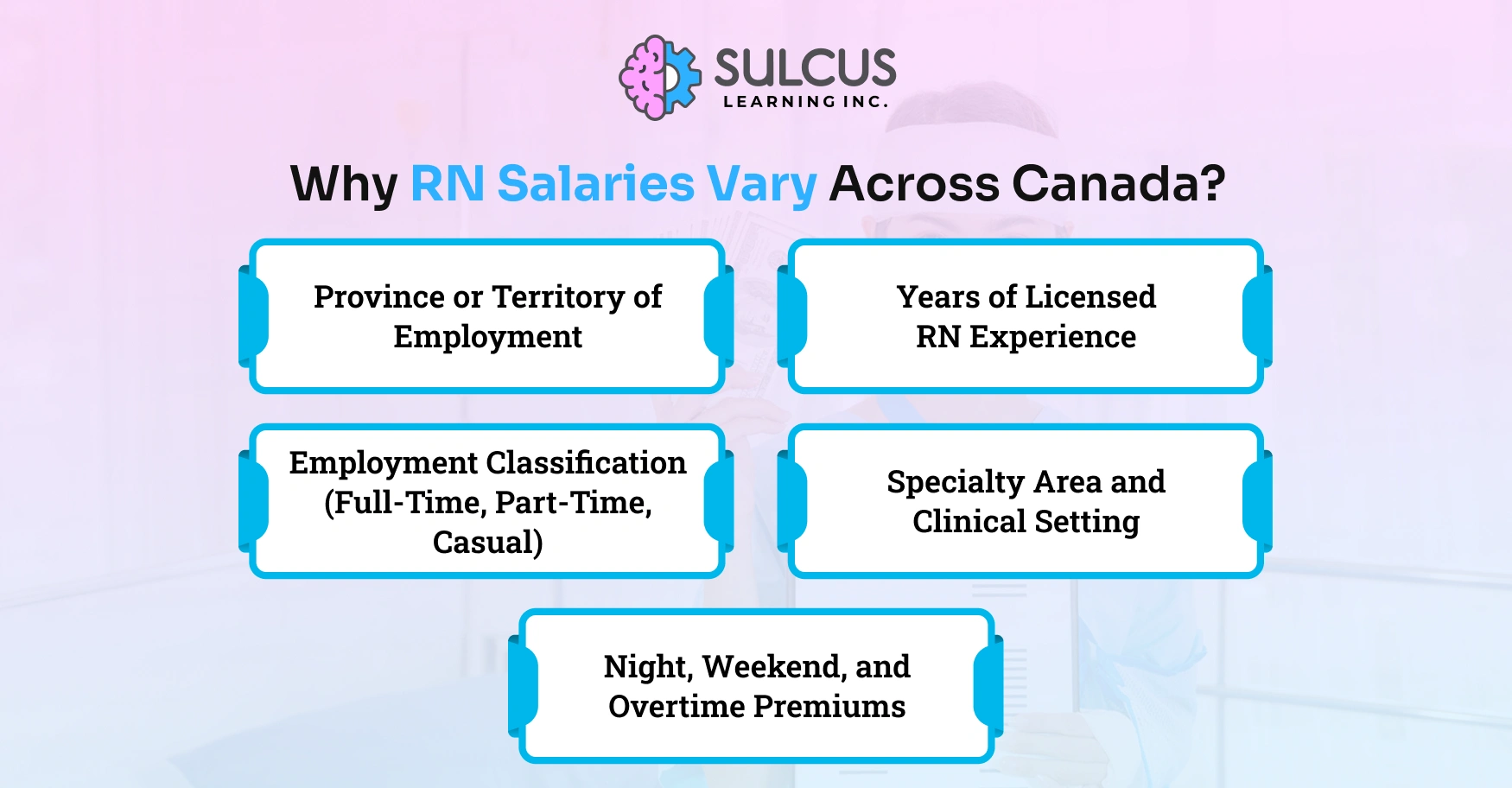
While Canada offers a national average RN salary, individual RN salaries are influenced by a number of different regulated settlement factors, such as:
- Province or territory of employment
- Years of licensed RN experience
- Employment classification (full-time, part-time, casual)
- Specialty area and clinical setting
- Night, weekend, and overtime premiums
Canada does have limited private-sector nursing, but Sulcus prefers public-system framing without absolutes. Registered Nurses are compensated for their work, but compensation is regulated by wage grids set by collective agreements between nursing unions and provincial governments.
Why These Figures Matter for Aspiring Nurses
Understanding RN salary in all 3 formats is beneficial for RNs in that it allows:
- A provincial salary RN compensation analysis will occur
- Enable accurate salary projections for exam preparation and early career planning.
- An assessment to occur regarding the RN’s salary-earning potential in the future
Lastly, for the new RN entering the Canadian workforce with licensure and a career plan, RN salaries are clearly defined, with transparent salary ranges and a progressive trajectory over the years.
Registered Nurse Salary by Province in Canada
RN salaries in Canada vary by province due to differences in collective bargaining agreements, provincial cost of living, healthcare funding, workforce shortages, and local incentives. Although there are pay scales and structures for different provincial wage grids, total compensation tends to increase more with experience, area of specialty, and eligibility for overtime and shift premiums.
Below is a province-by-province overview of average RN salary ranges across Canada.
1. Ontario
- Average RN Salary: CAD $85,000–$102,000 per year
- Entry-Level Hourly Rate: Approximately $39/hour
- Experienced RN Hourly Rate: $50+/hour
Employment in Ontario is very stable due to the extensive network of community healthcare systems and hospitals. Specifically defined benefit pensions, extended health coverage, and unionized positions are protections that enhance your overall package of long-term financial stability. Higher wages in specialty fields, such as ICU, emergency, and perioperative, are at the top of the scale.
2. British Columbia
Average RN Salary: CAD $88,000–$105,000 per year
British Columbia also has a structured step progression model for remuneration based on years of experience and classification level. This is the case for acute care, those with specialty certification, and supervisory roles. The province is also known for a high level of unionization with good benefits.
3. Alberta
Average RN Salary: CAD $90,000–$110,000 per year
Alberta has one of the highest average RN salaries in the country. RNs have the opportunity to increase annual income substantially through rural incentives, overtime, and company retention programs. Senior RNs and specialized nurses can earn considerably more due to premium pay.
4. Quebec
Average RN Salary: CAD $78,000–$95,000 per year
RN compensation in Quebec varies by classification, including:
- Infirmière (Registered Nurse)
- Infirmière clinicienne (Bachelor-prepared RN)
Due to the complexities of the salary structure based on collective bargaining, the salary for RNs in Quebec may be lower than in Western Canada. However, RNs in Quebec can expect salary increases at set intervals, in addition to step increases.
5. Manitoba
Average RN Salary: CAD $82,000–$98,000 per year
RN salaries in Manitoba are based on a provincial negotiation system with annual step increases. With an increasing demand for hospital systems and integrated community health and long-term care services, there are more job openings.
6. Saskatchewan
Average RN Salary: CAD $85,000–$100,000 per year
With a strong demand for healthcare in the regions, there are excellent opportunities for steady growth in the profession. The demand for competitive wage grids, combined with rural retention and recruitment incentive programs, is strong in the provinces.
7. Nova Scotia
Average RN Salary: CAD $80,000–$96,000 per year
Nova Scotia has invested heavily in healthcare, shifting the way RNs are compensated. In addition to the retention programs, the funding has been expanded, and the RN compensation structure has been improved.
8. Newfoundland and Labrador
Average RN Salary: CAD $83,000–$100,000 per year
Total earnings increase due to rural and remote practice incentives. There is excellent job security and guaranteed step progression under union contracts with provincial health authorities.
9. New Brunswick
Average RN Salary: CAD $80,000–$95,000 per year
Wage increases are based on provincial collective agreements. There is a growing need in both community health and acute care hospitals.
10. Prince Edward Island
Average RN Salary: CAD $78,000–$92,000 per year
There are fewer jobs in PEI’s smaller healthcare system, but competitive benefits and retention policies provide job security in hospitals and long-term care.
Northern and Territorial RN Salaries
In Canada’s northern regions (Yukon, Northwest Territories, and Nunavut), RN salaries are higher than in the provinces.
Average Annual Salary: CAD $110,000+
Higher compensation reflects:
- Geographic isolation
- Housing allowances
- Recruitment and retention incentives
- Travel and relocation support
- Expanded clinical responsibilities
These roles frequently include additional financial benefits beyond base wages.
RN Salary in Canada Based on Experience Level
Experience plays a central role in RN compensation under provincial wage grids. Structured step systems reward years of licensed practice and sustained professional standing.
1. Entry-Level RN (0–2 Years)
- Hourly Rate: $35–$40
- Annual Salary: $70,000–$85,000
- Typically positioned at Step 1 or Step 2 of the provincial wage grid
2. Mid-Career RN (3–9 Years)
- Hourly Rate: $42–$50
- Annual Salary: $85,000–$100,000
- Eligible for specialty certifications and leadership development pathways
3. Senior RN (10+ Years)
- Hourly Rate: $50–$63+
- Annual Salary: $100,000+
- Includes advanced clinical roles, specialty units, educator positions, and charge nurse responsibilities
How Experience-Based Pay Progression Works
An RN typically advances through the wage step system for each year of nursing service. Additional hours of service can encompass the following:
- License remains active and in good standings
- All professional and regulatory standards are complete
- Involvement with the provincial health system
Under this system, RNs are guaranteed a pay increase over time, provided they fulfil permanent clinical nurse roles with their employer.
What Factors Influence Registered Nurse Pay in Canada?
There are set factors that influence Registered Nurses’ salaries in Canada, and these are transparent and do not allow negotiation or market-driven influences. They are compensated through provincial systems designed to be equitable and consistent, and to promote long-term retention within the workforce.
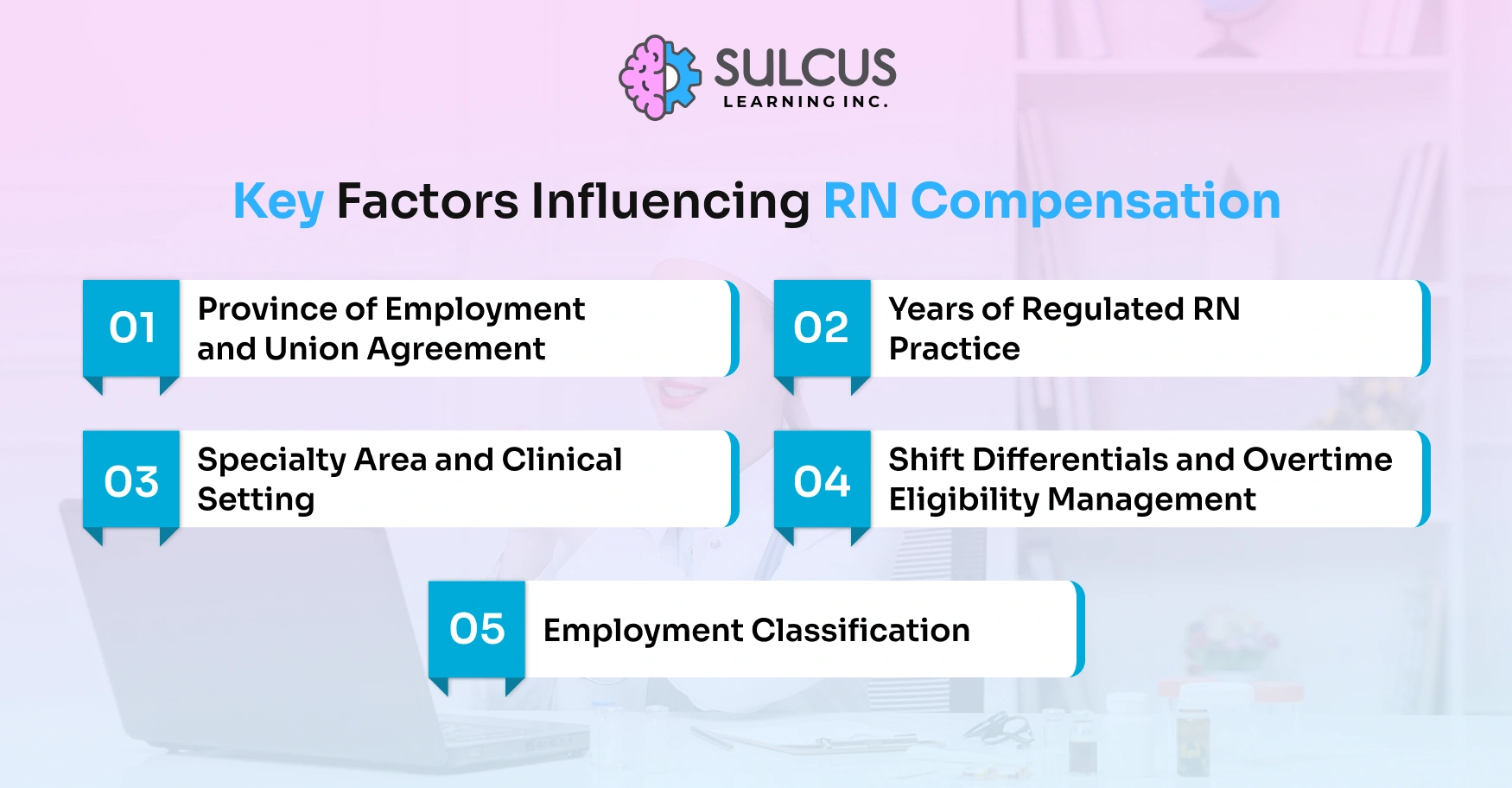
Key Factors Influencing RN Compensation include:
- Province of Employment and Union Agreement: Each province is responsible for collective bargaining for RN wages, so each has its own RN wage grid and separate benefits.
- Years of Regulated RN Practice: Annual pay increases occur through the step progression model, which is based on years of service.
- Specialty Area and Clinical Setting: RNs employed in high-acuity or high-demand specialties such as intensive care, mental health, or community health are eligible for additional premium pay.
- Shift Differentials and Overtime Eligibility: Higher pay rates apply to evening, night, weekend, and holiday shifts, resulting in higher total pay.
- Employment Classification: There are different employment classifications of full-time, part-time, and casual. This affects the level of benefits, the provision of guaranteed hours, and the consistency of income.
Unlike private-sector compensation models, RN salaries in Canada are collectively negotiated, offering predictable income growth, transparency, and long-term financial security for Registered Nurses across the country.
RN Salary Comparison: How Registered Nurses Compare to Other Nursing Roles
In Canada, nursing positions have different salary levels. Registered Nurses (RNs) will earn more than practical nurses. This can be attributed to differences in the education system, scope of practice, clinical responsibilities, and levels of accountability and regulation, all of which are closely tied to the types of nursing exams required for licensure.
Key Reasons RN’s Earn More include:
- Broader Clinical Autonomy and Accountability: More complex and unpredictable client care can be managed by RN’s which increases their professional liability.
- Higher Educational Requirements: A baccalaureate nursing degree is typically required for RN roles, which require advanced clinical judgment, leadership, and decision-making.
- Expanded Scope of Practice: More complex care coordination, assessment and evaluation, RNs are often in charge of performing these duties, and they work throughout many different clinical environments.
- Regulatory and Professional Expectations: RN licensure requires successful completion of the NCLEX-RN, and successful completion of the NCLEX-RN confirms readiness for entry-level registered nursing practice.
Overall, this comparison explains why many nurses pursue RN licensure as a long-term career pathway offering greater earning potential, broader professional opportunities, and sustained income growth within Canada’s regulated healthcare system.
Registered Nurse Compensation Beyond Base Salary
Registered nurse compensation in Canada extends well beyond the hourly wage or annual base salary. As part of a publicly regulated healthcare system, RNs receive comprehensive employment benefits negotiated through provincial collective agreements, which significantly increase overall compensation.
Key Components of RN Compensation include:
- Defined-Benefit Pension Plans: Almost every RN goes into an employer-sponsored pension plan that promises consistent income during one’s retirement years.
- Paid Vacation and Statutory Holidays: RNs are complemented with vacations during which they take time off from work, and that time off increases with the years of service. Registered Nurses receive paid statutory holidays, allowing compensated time away from work in accordance with provincial collective agreements.
- Health, Dental, and Disability Coverage: Typical benefit packages include coverage for dental and, of course, Health care, and provide insurance for both short- and long-term disability.
- Shift Premiums and Overtime Compensation: Higher payments are made during the evening, night, and weekends, and work during statutory holidays also attracts even higher payments, so an RN is likely to earn a lot more on the base wage.
- Professional Development and Education Support: Many employers provide funding or paid time for continuing education, certifications, and mandatory training.
Total Compensation Value
The additional benefits increase RN compensation packages in Canada by 20%-30% above the base salary. These positions are among the most financially secure in healthcare.
It’s easy to see why RN roles in Canada are long-term professions with value in revenue, long-term benefits, retirement, and sustainability.
How RN Salaries Are Calculated in Canada
Many aspiring nurses ask how RN salaries are calculated in Canada, especially when comparing Canadian nursing careers with private or international healthcare systems. Unlike individually negotiated pay models, RN compensation in Canada follows a structured and regulated framework.
Key Components of RN Salary Calculation
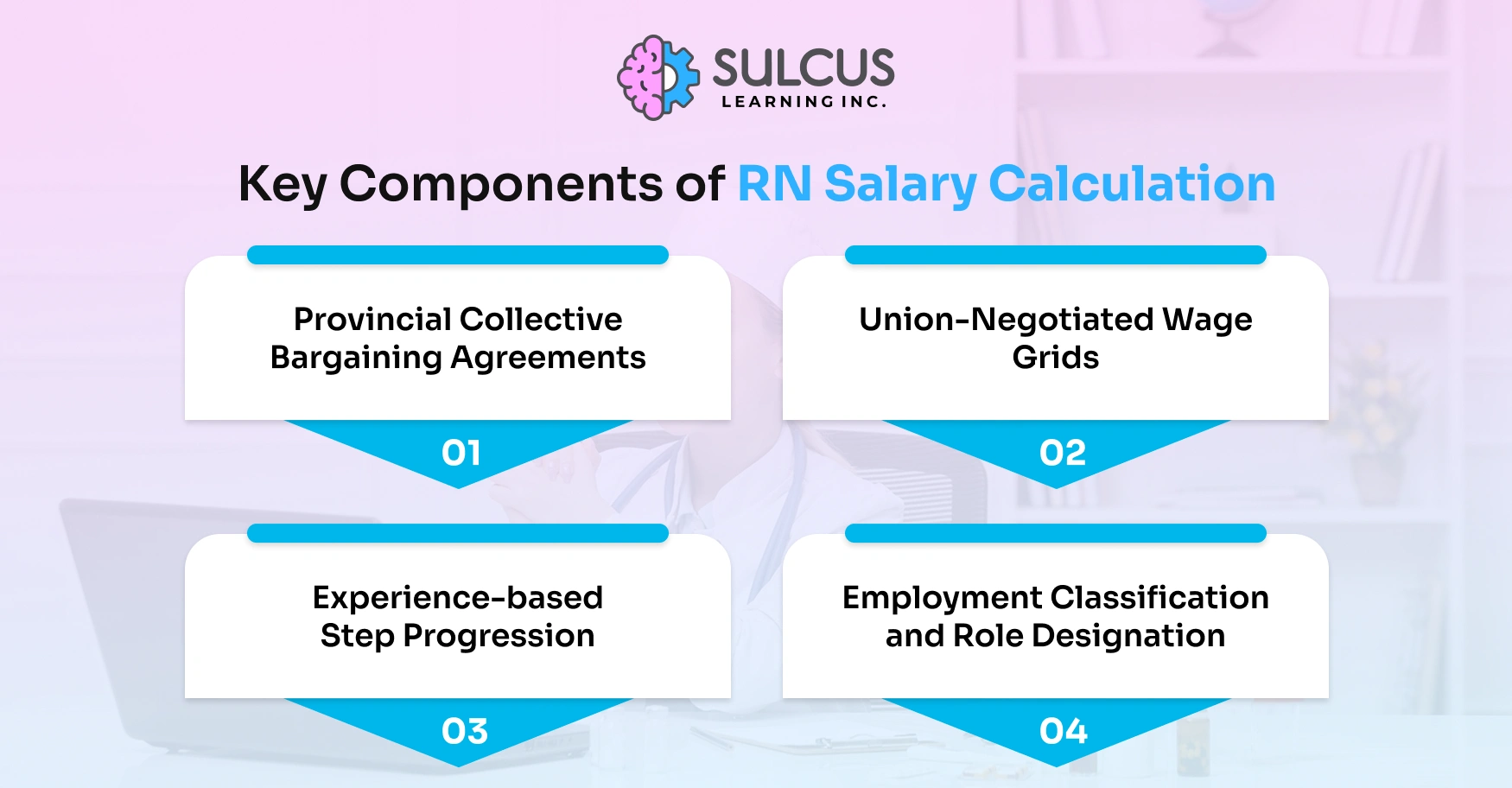
Registered Nurse pay in Canada is determined through:
- Provincial Collective Bargaining Agreements: Each province establishes RN wages through formal agreements between healthcare employers and nursing unions.
- Union-Negotiated Wage Grids: These grids outline standardized hourly rates, ensuring consistent pay across healthcare settings within the same province.
- Experience-Based Step Progression: RN salaries increase annually as nurses move through predefined wage steps based on years of licensed practice.
- Employment Classification and Role Designation: Factors such as full-time, part-time, or casual status, as well as clinical role or specialty, influence total earnings and eligibility for benefits.
Why This System Matters
This structured approach ensures fairness, transparency, and consistency in RN compensation across Canada’s health care systems. For new nurses, the system outlines expectations for compensation in the short, medium, and long term, how it grows over time, and the financial security it provides. These are all critical factors in deciding when to obtain licensure, start working, and advance one’s career.
Understanding Nursing Roles, Licensure Exams, and Salary Pathways in Canada
In Canada, the various pathways available to nurses are based on three main factors. These factors are education level, licensing requirements, and scope of practice, as nursing roles are regulated. Each designation as a nurse has different levels of responsibility, accountability and different pay structures that affect the career ladder. Understanding RN vs. PN distinctions, as well as differences in education, clinical independence, and regulations, helps future nurses make informed decisions about education and other factors that influence nurses’ goals, income, and career ladders within the Canadian health care system.
Comparing RPN salary and LPN salary benchmarks alongside RN compensation further clarifies how earnings differ across nursing roles within Canada’s regulated healthcare system. The differences in pay result from differences in scope of practice, education level, the province’s wage grid, and years of practice.
Practical Nurses in Canada: Licensure and Examination Pathways
In Canada, licensing for Practical Nurses is conducted through examinations developed in Canada. Depending on the province and the governing body, the candidates have to pass one of the following exams to become a nurse:
- REx-PN (Regulatory Exam – Practical Nurse)
- CPNRE (Canadian Practical Nurse Registration Examination)
Each province has the discretion to determine which exam candidates must take, based on its own regulations.
It is crucial to understand the structure, formatting, and requirements of these exams. This streamlines the registration process to avoid delays, maximize employment opportunities, and minimize the effort required for future job searches.
Knowing the requirements to obtain a license can save time, as they can be integrated into an educational plan to achieve the goal of becoming a practicing nurse in Canada without impediments to participating in the Canadian healthcare system.
Boost Your Nursing Exam Success with Sulcus Learning’s Advanced Smart Prep Platform
The Canadian nursing licensure exam, though a regulatory obligation, is also an opportunity that must be taken to open the doors to employment, the beginning of an RN salary, and the sustenance of career advancement in quick succession. Once delays in Canada’s healthcare system and shortages of registered nurses are experienced, the impact on employment and wage growth is profound.
As the Best Nursing Exam Prep Platform, Sulcus Learning leverages the expertise of nursing educators and exam blueprints, clinical judgment, and the pressure of real exams. Students can improve their decision-making, identify areas of weakness, build resilience to testing, and perform well on many exams, thereby accelerating their transition to licensed practice with confidence.

Conclusion
When speaking about Registered nurses in Canada, the way they are paid speaks to the structure of the Canadian nursing system and its respect for the nursing profession’s level of responsibility. Nurses in Canada have a steady, union-controlled salary scale with upward salary growth, secure benefits, and a stable demand for nurses, which makes nurses’ pay very consistent across the system compared to other countries.
For nurses looking to build a sustainable, steadily growing professional future, it is important to understand how the license exam calculates a nurse’s pay. The more experience a nurse gets, the more their pay increases. This needs to be coupled with a solid plan to support further growth and development in the professional side of nursing.
FAQs
Q1. Do registered nurses earn more in Canada?
Ans. Yes. Registered nurses in Canada earn more overall due to union-negotiated wage grids, structured annual increments, paid benefits, pensions, and overtime premiums, resulting in stable, predictable income growth compared with many healthcare systems worldwide.
Q2. Which province pays nurses the most in Canada?
Ans. Alberta and British Columbia frequently rank highest, while northern and remote regions exceed provincial averages through isolation allowances, housing support, and recruitment incentives, resulting in the highest overall registered nurse compensation packages in Canada.
Q3. How to Pass the NCLEX successfully?
Ans. To pass the NCLEX, candidates must focus on clinical judgment, prioritization, and safe patient care decisions. Structured preparation, exam-aligned practice questions, realistic simulations, and consistent performance analysis significantly improve first-attempt success rates.
Q4. What is the average salary of a registered nurse in Canada per year?
Ans. Most registered nurses in Canada earn between $75,000 and $104,000 annually in base pay, depending on province and experience, with overtime, premiums, and benefits significantly increasing total yearly compensation for full-time, unionized public-sector healthcare employment.
Q5. What is the difference between NCLEX-PN vs NCLEX-RN?
Ans. The NCLEX-PN vs NCLEX-RN differ in scope and complexity. The NCLEX-RN assesses broader clinical judgment, leadership, and comprehensive care management, while the NCLEX-PN focuses on practical nursing responsibilities under more defined supervision structures.
Q6. Does experience affect RN salary in Canada?
Ans. Experience directly influences RN salary in Canada, as each year of licensed practice advances nurses through wage steps, rewarding long-term service, clinical competence, and professional accountability rather than frequent job changes within provincial healthcare employment systems.
Q7. What is the NCLEX-RN Passing Score in 2026?
Ans. The NCLEX-RN Passing Score is not expressed as a percentage or fixed number of correct answers. Instead, it is based on a computerized adaptive testing (CAT) model that measures whether a candidate consistently demonstrates minimum safe-practice competency. The National Council of State Boards of Nursing (NCSBN) establishes the passing standard using a logit-based ability scale that reflects clinical judgment and decision-making rather than raw scores. Candidates pass when their performance remains above the established competency threshold.
Q8. What are the NCLEX Changes 2026?
Ans. NCLEX Changes 2026 continue emphasizing advanced clinical judgment, case-based reasoning, and competency evaluation. The exam increasingly reflects real-world decision-making expectations, requiring candidates to interpret cues, prioritize care, and evaluate outcomes more strategically.

Harry Sagar
Passionate and detail-oriented leader at Sulcus Learning, dedicated to supporting internationally educated nurses in achieving their professional goals. With experience as a general practitioner, smoking cessation consultant, and licensed practical nurse, I combine clinical expertise with mentorship. Guided by the philosophy, “Your Success is Our Ambition,” I help nurses gain confidence, competence, and career-ready success.