
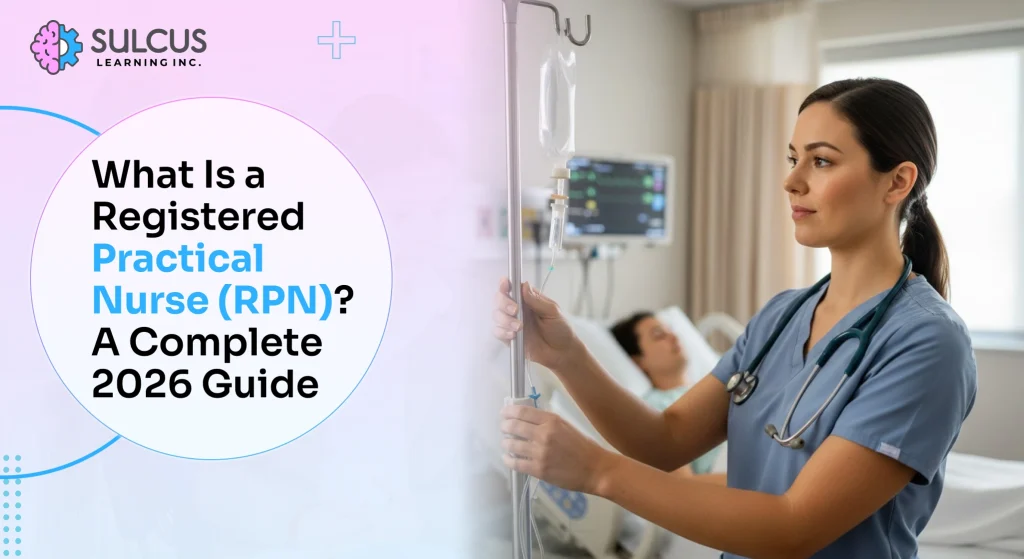
Registered Practical Nurses (RPNs) are one of the most prominent healthcare professionals in the Canadian healthcare system. They are known for their empathy and practicality in patient care.
In the health care system, RPNs are essential providers of patient care, supporting high-quality care in cooperation with physicians, Registered Nurses, and other health care professionals.
Whether you are a Canadian nurse, a nursing graduate, or a nurse from abroad who wants to work in Canadian health care, you should first understand the role of a Registered Practical Nurse.
This guide is designed to help you understand RPNs’ role in the Canadian health care system, including their education, licensure, salaries, and job prospects.
What is a Registered Practical Nurse (RPN)?
RPNs are one of the most highly regarded nursing professionals in the Canadian health care system. They are known for providing safe, competent care to patients and for exhibiting empathy and compassion.
In Canada, RPNs are experienced nursing professionals who work both independently and with other healthcare professionals. They practice within their defined scope of practice by doing assessments, executing nursing care, and determining client outcomes, and are licensed to administer medications.
RPNs work in collaboration with other health care professionals, including Registered Nurses and Physicians, in maintaining and improving client health quality. RPNs work outside the traditional health care system and deliver their expert services in hospitals, community clinics, rehabilitation centres, long-term care facilities and a variety of primary care settings.
They are equipped with a highly integrated education program (nursing theory and clinical practice) that focuses intrinsically on client assessment, monitoring, therapeutic communication, and evidence-based decision-making.
Specific attributes such as compassion, professionalism, and sound clinical judgement are the building blocks of safe and effective nursing practice in the Canadian healthcare system.
What Does a Registered Practical Nurse Do?
Within the nursing profession in Canada, a Registered Practical Nurse (RPN) performs numerous activities, including administering medications, conducting client assessments, supporting rehabilitation, and teaching health promotion within interdisciplinary teams.
RPNs deliver nursing care to all demographics.
RPNs typically care for clients with more predictable, stable conditions, whereas RNs care for more complex patients.
Nonetheless, RPNs must consider their individual competencies, the environment in which they practice, the client’s needs, and applicable provincial nursing regulatory standards.
Educational Requirements to Become an RPN
To become an RPN in Ontario, one must complete a two-year practical nursing diploma program at an accredited college. Nursing curricula typically include anatomy and physiology, pharmacology, client communication, and healthcare ethics.
In addition to the diploma, you must also take the RExPN exam. Nursing programs in Canada are known for the quality and quantity of their clinical placements, which prepare students to practice nursing in real Canadian healthcare settings.
Essential abilities for RPNs as we step into 2026
As a registered practical nurse (RPN) in Canada, technical skills and being personable are equally important. RPNs need to be proficient in key pillars of nursing, including clinical assessments, medication adherence, report writing, and collaboration.
On the other hand, the most successful RPNs tend to cultivate soft skills such as active listening, patience, and adaptability.
Emotional intelligence, in particular, is expected to grow in importance as the healthcare industry continues to implement more technology. As such, the profession will continue to require greater self-directed learning and professional development from nurses.
How to Become a Registered Practical Nurse (RPN) in Canada
To become a Registered Practical Nurse (RPN) in Canada, you have to finish all the steps in a training process, which includes a complete training program that operates under the law, the meeting of training law requirements, as well as the proving of training law requirements.
Step 1: Complete High School Requirements
Complete all high school courses, typically English and Biology. However, some provinces will have additional requirements, such as Mathematics or Chemistry.
Step 2: Graduate From an Approved Practical Nursing Program
You must complete a provincially or territorially approved Practical Nursing diploma program that includes a balance of academic and clinical training components.
Step 3: Complete Mandatory Clinical Practice Hours
Complete the clinical placements that are necessary to complete the program to develop and demonstrate full nursing competencies.
Step 4: Apply to the Nursing Regulatory Body
Apply for registration with the provincial or territorial nursing regulator where you plan to practise.
Step 5: Meet Registration Requirements
You will need to take the jurisprudence test, provide proof of language proficiency, provide letters of good standing, and show that you have no criminal record.
Step 6: Pass the Registration Examination
You must now pass the RExPN exam to demonstrate the required competencies.
Step 7: Begin Practice as an RPN
You will now move to your work in designated settings such as hospitals, long-term care facilities, community clinics, rehabilitation facilities, and home care.
Step 8: Maintain Ongoing Registration
Keep your license current through annual renewal, continuing competence activities, and professional development.
Understanding how to become a nurse in Canada provides clarity and confidence, guiding you from education to licensure and long-term, safe professional practice.
RPN Salary and Career Outlook in Canada (2026)
The RPN salary in Canada in 2026 varies by province or territory, experience, union contracts, and practice setting. RPNs can earn $55,000- $80,000 per year, with higher wages often found in urban settings, speciality units, and positions that offer shift differentials and overtime.
Employers tend to offer higher RPN salaries in Alberta and Ontario, especially in Ontario, where unions exert more influence. Experienced RPNs can earn more at the higher end of the estimated salary range, but hospitals, management roles at long-term-care sites, or higher-level specialized practice areas often provide better compensation.
Overall, RPN salaries are generally higher, but employers also offer Registered Nurse (RN) roles in the same areas, which typically provide higher wages based on education level and scope of practice.
Overall demand for RPNs in Canada is very high. The increased average age, higher rates of chronic disease, and understaffed healthcare sectors make practical nursing especially valuable across acute-care hospitals, long-term-care homes, community health settings, and home care.
RPN Job Roles and Responsibilities in Canada
Registered Practical Nurses (RPNs) in Canada work across various settings in a safe, client-centred manner. They promote health and safety and support recovery while working autonomously and collaboratively within their scope of practice.
RPNs conduct assessments by checking and recording vital signs, noticing changes in the client’s condition, and documenting care and outcomes. Coordinated care plans with Registered Nurses, doctors, and other healthcare professionals are crucial in their work.
Rehabilitation, mobility, emotional support, and medication teaching are all responsibilities of RPNs. They educate clients on managing chronic conditions, medications, and health protection.
RPNs serve the health care teams and the clients by communicating and connecting with both parties. They possess a clinical level of practice and communication, which opens numerous job and professional development opportunities.
Career Opportunities for Registered Practical Nurses
RPNs develop highly integrated and adaptable career pathways within the nursing field: hospitals, home care, and community and mental health.
As a nurse, even greater career options are available, such as leadership, teaching, and other nursing specialties.
In Canada, many RPNs opt to complete bridging programs to attain RN licensure which further expands their roles and career prospects. Many practical nurses complete bridging programs to become Registered Nurses, which is a common avenue for career progression.
RPNs highly regard the nursing profession for its positive impact on people’s lives, given the professional flexibility and job security.
Why Choose a Career as an RPN?
Of all professions in Canada, becoming a Registered Practical Nurse is arguably one of the most rewarding and respected.
RPNs support clients at all health stages, even those who need comfort-focused, caring attention.
RPNs enjoy guaranteed steady pay and root themselves in a purpose of helping others, work all across the country, make community improvements, and provide a strong nursing backbone.
For those who care, the community, and connection, becoming a Registered Practical Nurse is a valued profession in Canada. For many, practical nursing is a career, but above all, it is a vocation in service.
Provinces and Territories That Recognize Practical Nurses in Canada
In Canada, the regulation of practical nursing is set by each province or territory, resulting in some variation in how the roles are titled. However, the core of practice remains nationally harmonized.
The College of Nurses of Ontario governs the title Registered Practical Nurse (RPN) in Ontario. In the remaining provinces and territories, the corresponding title for the same role is Licensed Practical Nurse (LPN).
Despite differences in title, RPNs and LPNs share similar education, clinical training, and entry-to-practice requirements, all part of the same Practical Nursing diploma program. An RPN from Ontario who works in another province will register as an LPN and therefore practice under that province’s scope and regulatory requirements.
In each province, a nursing regulatory body oversees licensure, scope of practice, and professional conduct, ensuring that nursing care is safe, competent, and ethically delivered nationwide.
Boost Your RPN Exam Success with Sulcus Learning
REx PN EXAM Prep? Sulcus Learning can help you succeed by being the best online prep platform for nursing students and professionals in Canada. Sulcus caters to Registered Practical Nurse (RPN) candidates and provides the best custom question bank with big data analytics, multiple practice exams, and intelligent readiness predictors.
Assess your readiness and track your improvement to master each topic. Gain your built confidence with practice exams that are adaptive and mirror the actual exam. Regardless of where you’re at in your nursing education or profession in Canada, Sulcus provides the best prep to help you succeed on the REx PN exam.

Conclusion
The Registered Practical Nurse (RPN) profession is the epitome of stability, growth, and fulfilment across Canada. Every step of the education and licensure process, shapes you into an adept, and caring caregiver.
Have you heard of registered practical nurses? Start your journey. Your nursing career dreams are now closer with guidance, dedication, and the support from Sulcus Learning.
FAQ’s
Q1. How long does it take to become an RPN in Canada?
Ans. It usually takes two years to become a Registered Practical Nurse in Canada, including coursework, clinical training, and passing the RExPN exam to qualify for provincial registration and licensure.
Q2. What is the difference between a Registered Nurse and a Practical Nurse?
Ans. The difference between a registered nurse and a practical nurse lies in education and scope. RPNs complete a two-year diploma, while RNs earn a degree and handle complex, critical healthcare situations.
Q3. Can a Practical Nurse become a Registered Nurse?
Ans. Yes, a practical nurse can become a registered nurse through bridging programs that upgrade diploma credentials to a Bachelor of Science in Nursing (BScN), expanding skills, responsibilities, and career growth opportunities.
Q4. What is the salary of an RPN in Ontario?
Ans. The average Ontario Registered Practical Nurse (RPN) salary ranges between $55,000 and $70,000 annually, depending on experience, location, and healthcare facility, offering stable income and excellent career growth potential.
Q5. Are RPNs in demand in Canada?
Ans. Yes, RPNs are in high demand across Canada’s healthcare system due to ageing populations and staffing shortages, offering consistent job opportunities in hospitals, long-term care, and community healthcare sectors.

Harry Sagar
Passionate and detail-oriented leader at Sulcus Learning, dedicated to supporting internationally educated nurses in achieving their professional goals. With experience as a general practitioner, smoking cessation consultant, and licensed practical nurse, I combine clinical expertise with mentorship. Guided by the philosophy, “Your Success is Our Ambition,” I help nurses gain confidence, competence, and career-ready success.