
Next Generation NCLEX has a great impact on the nursing license process in Canada. For candidates about to take the NCLEX-RN or those planning to start their professional practice, knowing what NGN is is really part of the exam preparation.
NGN is different because it is trying to test clinical judgment through true and real-world client care situations. This is what Canada expects. Because of this, Canada has a greater demand for nurses who can think, prioritize, and make clinical decisions safely and quickly.
This guide will enable you to understand what NGN is, how the structure of the exam is, and how to prepare for the exam. This will help you have a clear mind and a confident approach to the NCLEX.
What is NGN in NCLEX?
When students ask, “What is NGN NCLEX?”, they are referring to the updated version of the NCLEX that emphasizes advanced clinical judgment and real-world decision-making in client care scenarios.
NGN stands for Next Generation NCLEX, which is a new exam format that tests more than just theoretical knowledge, but how well you use that knowledge in difficult, practice-oriented situations.
In contrast to the older edition, NGN focuses more on critical thinking, clinical judgment, and the ability to prioritize problems, which are essential skills for safe and proficient nursing practice in Canadian and international nursing fields.
How NGN is Different from Traditional NCLEX
The most substantial difference between the NGN and traditional NCLEX is how they assess your competencies. NGN assesses your ability to utilize your knowledge in actual clinical situations as opposed to just assessing what you know.
In the traditional NCLEX, most of the test questions focus on knowledge recall, and you will see a lot of questions in the multiple-choice format. The application portion of the questions is almost non-existent. While examining basic knowledge is important, it cannot be used to evaluate one’s ability to make clinical decisions in the field.
The NGN on the other hand, includes multiple questions that are case-based and require a high level of thinking, decision making, prioritization, and clinical judgment. NGN also uses partial scoring, which provides a better way to evaluate the clinical thought process of a candidate in decision making.
The shift also shows how advanced Canadian healthcare is. Nurses in Canadian healthcare are required to evaluate situations, make clinical judgments, and provide timely and safe, evidence-based care in ever-changing clinical situations.
What Are NGN Questions?
If you are looking for an answer to what Next Gen NCLEX questions are, it simply refers to the NGN to assess a candidate’s clinical judgment and decision-making in realistic care scenarios.
Unlike traditional NCLEX questions, NGN focuses on single-step answers, they are designed to evaluate how a candidate thinks through complex clinical situations. NGN questions measure the candidate’s ability to recognize cues, prioritize actions, analyze data, implement care, and assess outcomes for skills essential for safe nursing practice.
NGN Question Formats may Include
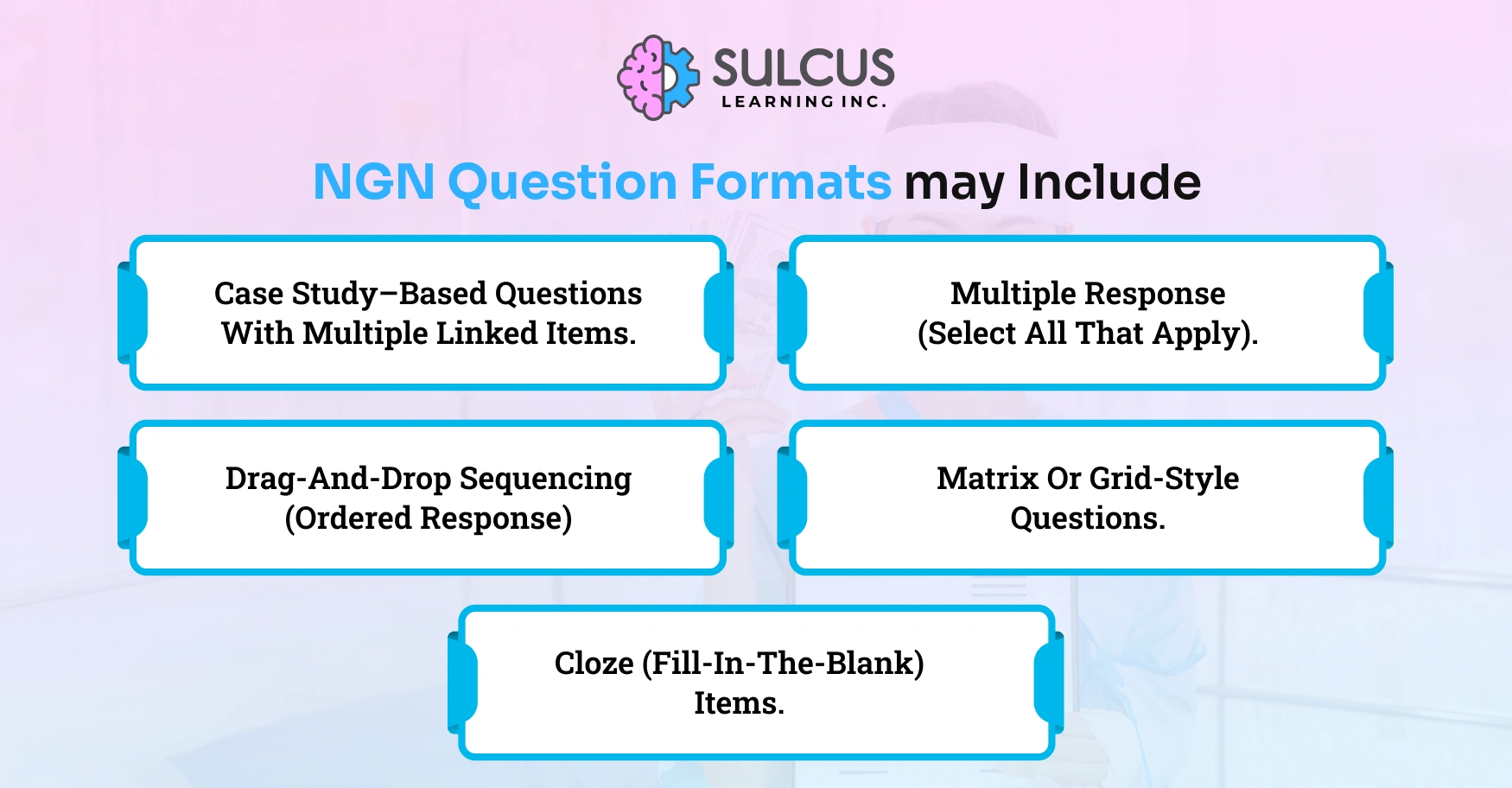
- Case study–based questions with multiple linked items.
- Multiple response (Select All That Apply).
- Drag-and-drop sequencing (ordered response)
- Matrix or grid-style questions.
- Cloze (fill-in-the-blank) items.
NGN questions are commonly presented within structured case studies, where several questions are based on the same client scenario. Prospects are required to interpret clinical data such as vital signs, laboratory results, nursing notes, and provider orders.
To answer correctly, candidates must apply clinical reasoning by identifying relevant information, determining priority findings, and making safe, evidence-based decisions. This approach closely reflects real-world nursing practice and aligns with how nurses provide care in actual clinical settings.
How Many NGN Questions Are on the NCLEX?
One of the most asked questions is ”How many NGN questions will the NCLEX have?” Here is how the Next Generation NCLEX will break down:
Exam Structure Overview
- Minimum Questions: 85
- Maximum Questions: 150
NGN Case Study Breakdown
- Number of Case Studies: Typically 3 (scored)
- Questions per Case Study: 6 Questions
- Total NGN Case Study Questions: 18 Questions
How They Appear in the Exam
- Integrated within the full exam (not a separate section)
- Mixed with traditional NCLEX question types
- Delivered through computer adaptive testing (CAT)
This format will help NGN questions be natural within the exam, so it can assess your clinical judgement and decision making the most accurately.
How NGN Scoring Works
NGN scoring system uses a new scoring method called partial credit, which NGN states will better evaluate a candidate’s clinical judgment.
Key Features of NGN Scoring
- Partial Credit: You can still receive credit even if your answer is not completely correct
- No All-or-Nothing: Multiple-response questions are based on your selections and are not considered correct or incorrect based on the overall selection
- Step-by-Step Evaluation: Each part of your clinical reasoning is evaluated
Partial credit is a better method when evaluating a candidate’s clinical judgment compared to the older scoring system that NGN used, which is how NGN is using the old method to evaluate candidates’ judgment when caring for clients.
NGN and Clinical Judgment Model
The Next Generation NCLEX has its foundations on the Clinical Judgment Measurement Model (CJMM), which is a framework for evaluating your judgment and actions in actual client care scenarios.
This model evaluates your ability to:
- Recognize Cues: Relate to and identify specific client details
- Analyze Cues: A Clinical data and findings
- Prioritize Hypotheses: Identify the most probable client problems
- Generate Solutions: Propose relevant nursing actions
- Take Action: Execute care that is safe and effective
- Evaluate Outcomes: Determine client responses and modify care
This model helps to ensure that the candidate’s decision making is practical and that it helps prepare the candidate to undertake safe, competent, and evidence informed clinical practice. This is why the model is closely aligned with the nursing processes in the Canadian nursing system.
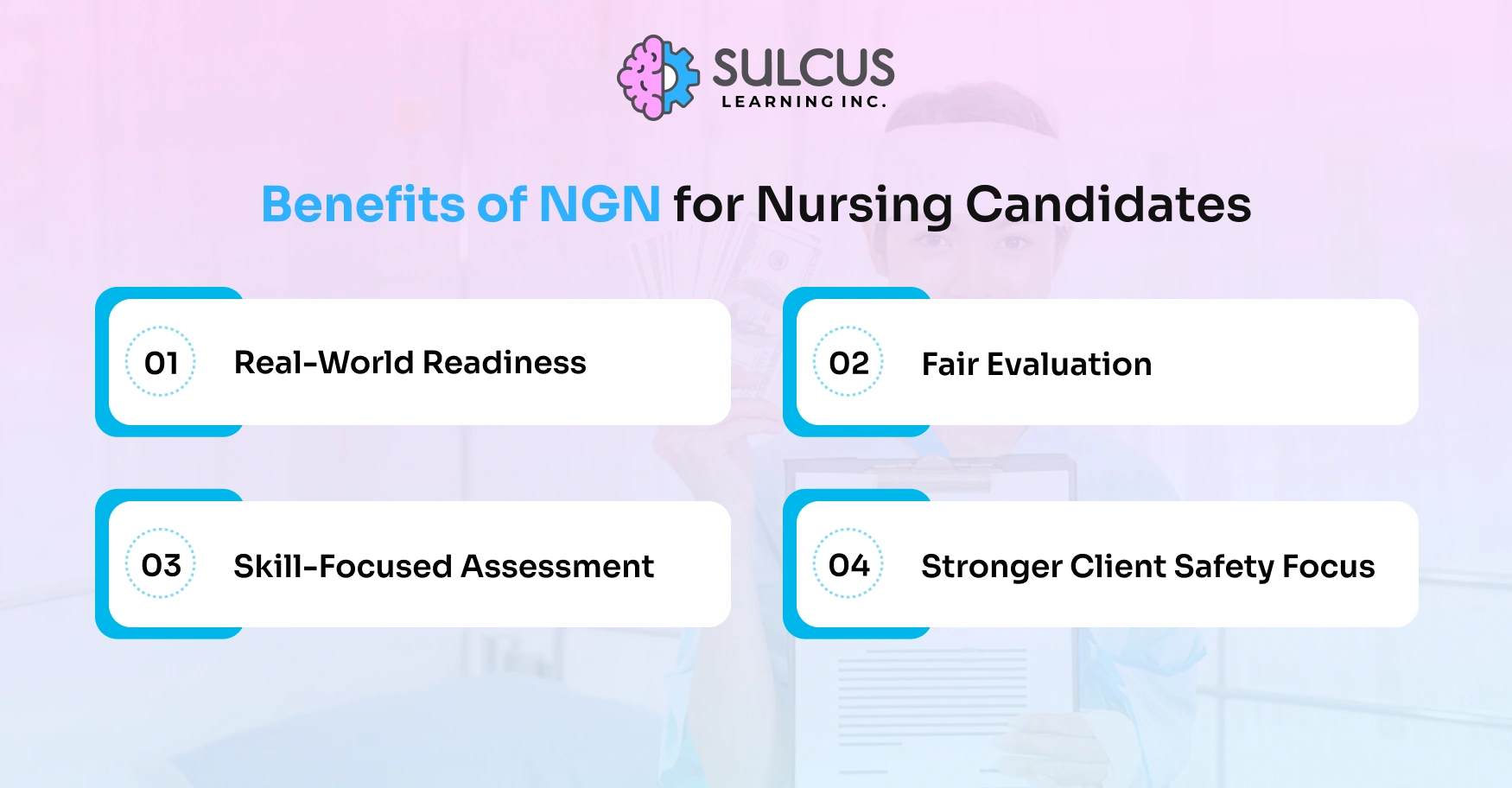
Benefits of NGN for Nursing Candidates
The Next Generation NCLEX has a number of benefits for aspiring nurses, and particularly those looking to engage in real-world clinical practice in Canada.
- Real-World Readiness: You will be tested on how you use your knowledge in clinical client scenarios.
- Fair Evaluation: Polytomous (partial) scoring will reduce the penalty for minor mistakes and will be a true indication of your clinical reasoning.
- Skill-Focused Assessment: More emphasis on thinking, analyzing, prioritizing, and decision making as opposed to remembering lists.
- Stronger Client Safety Focus: Increased emphasis on the standards of healthcare in order to provide safe, competent, and evidence-based care.
NGN prepares candidates to practice and have the necessary clinical judgment to provide safe and necessary care from the beginning.
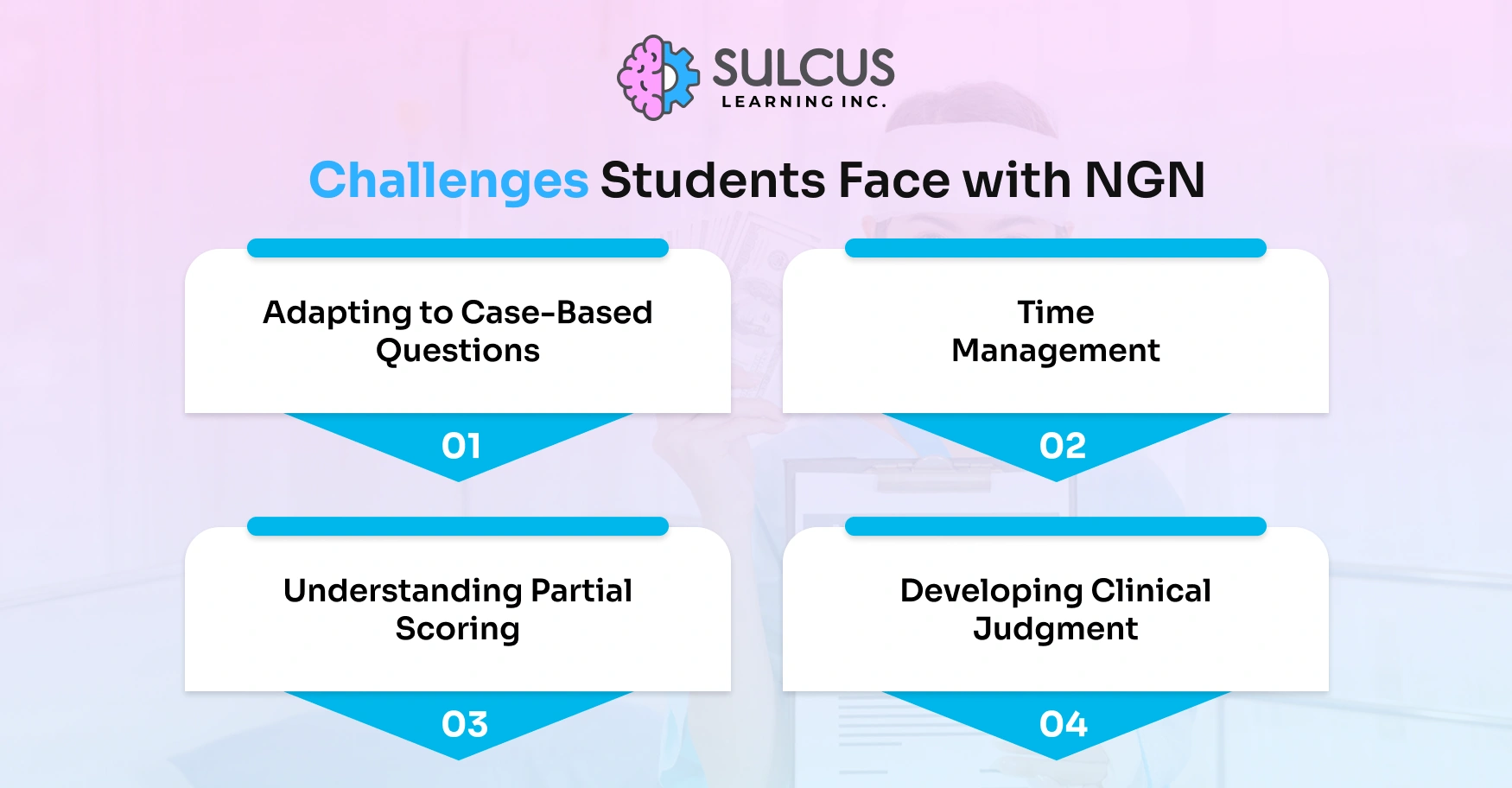
Challenges Students Face with NGN
Despite the Next Generation NCLEX having a more clinically relevant and practical approach, it poses numerous new challenges for nursing students.
- Adapting to Case-Based Questions: Instead of single questions, they have to deal with questions containing multiple clinical situations.
- Time Management: Multiple clinical situations make it harder to control the time when answering the questions.
- Understanding Partial Scoring: Candidates have no guidance when it comes to scoring, and it is difficult to understand.
- Developing Clinical Judgment: Candidates often have to practice a lot, which is a result of the clinical judgment that is lacking.
Many candidates depend on the conventional methods of study based on memorization, which is misaligned with NGN’s clinical reasoning focus. Because of this, adjusting to NGN’s clinical reasoning will require application based study and critical thinking.
How to Prepare for the NGN NCLEX
When preparing for the Next Generation NCLEX NGN exam, the focus should be on application learning and clinical reasoning as opposed to rote memorization.
Focus on:
- Practice Case-Based Questions: NGN style questions will help to make you familiar with the exam and ease your worries.
- Strengthen Clinical Reasoning: You will need to analyze the client’s data of the client, determine what the most important aspects are, and make a safe decision.
- Understand Client Scenarios: Get above the textbook concepts and learn to apply what you have learned in practice.
- Use Adaptive Mock Exams: Get as prepared as possible by practicing with computer adaptive tests like the ones given at the actual NGN exam.
Developing your preparation involves answering questions on core concepts, such as What is the NCLEX Exam? and What is a Computer Adaptive Test? Knowing the fundamentals will help you have a better understanding of the NGN format.
Tips to Master NGN Questions
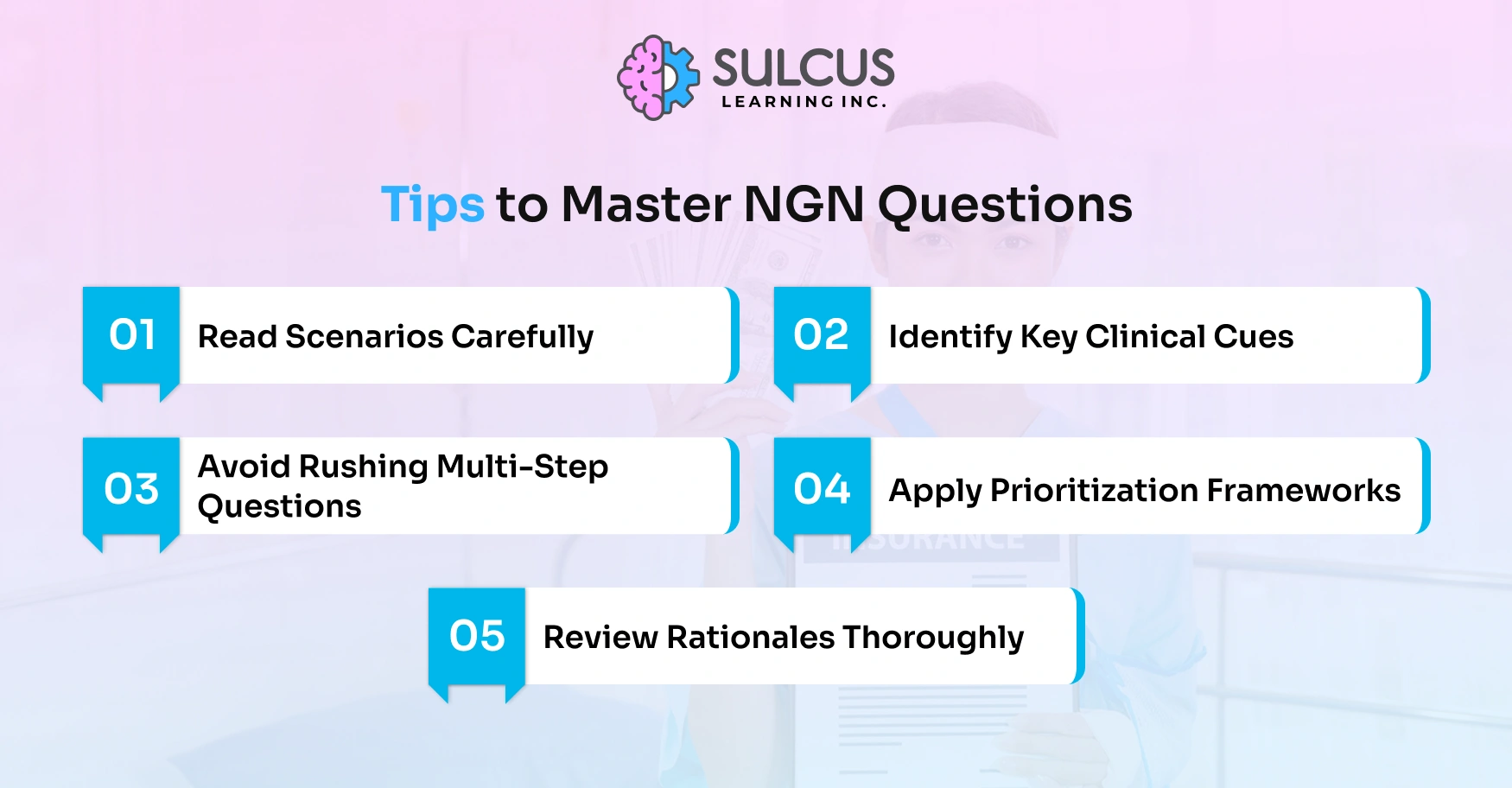
In order to do well on the Next Generation NCLEX Exam, you will need to place a more significant focus on the use of clinical reasoning and the importance of answering exam questions accurately.
- Read Scenarios Carefully: Make sure you really understand the client situations, context, and think through the answer options as best as you can
- Identify Key Clinical Cues: Find the points, in particular the signs, and data, that are of central importance in the situation and decision making to help guide you in the right direction.
- Avoid Rushing Multi-Step Questions: Try to do each case study in multiple smaller questions, as the questions are often interrelated and examine different things.
- Apply Prioritization Frameworks: The clinical world has some rules, for example, the importance of the ABCs and Maslow’s hierarchy, which you can use to help guide your clinical decisions.
- Review Rationales Thoroughly: Focus on explanations for the incorrect choices of answers as well as correct ones.
Ensure you answer the multiple-choice questions with a rationale. Work to develop your clinical reasoning from the questions and not the right answer.
How Sulcus Learning Helps You Master NGN
Preparing for the Next Generation NCLEX requires more than traditional study methods, it demands a platform that replicates real exam conditions and builds clinical judgment. Sulcus Learning is designed specifically for modern NCLEX preparation, including NGN, with a strong focus on real-world application.
Sulcus Learning stands out as the only platform offering true CAT (Computer Adaptive Testing)–based exam preparation, closely mirroring the actual NCLEX experience. This allows candidates to understand how question difficulty adapts and how their performance is evaluated in real time.
With Sulcus Learning, you gain access to NGN-style case studies, authentic exam simulations, logit-based scoring, and a predictive readiness indicator. Advanced analytics, including performance tracking, competency insights, and detailed exam reports, help identify strengths and improvement areas.
This structured, data-driven approach ensures you’re not just studying, you’re developing the clinical reasoning, accuracy, and confidence needed to succeed in NGN and deliver safe, effective client care in Canadian healthcare settings.
Conclusion
The Next Generation NCLEX marks a significant evolution in how nursing competency is evaluated. It shifts the focus from memorization to clinical judgment, decision-making, and the ability to apply knowledge in real client care situations effectively.
For Canadian nursing students, understanding what NGN means and how it impacts the exam structure is essential. Adapting your study approach to align with case-based learning and clinical reasoning will play a key role in your success.
With the right preparation strategy, reliable resources, and consistent practice, you can confidently navigate NGN. Building strong clinical judgment skills will not only help you pass the NCLEX exam but also prepare you for safe, competent nursing practice.
FAQ’s
Q1. What is NGN NCLEX?
Ans. NGN NCLEX refers to the updated version of the Next Generation NCLEX that assesses clinical judgment through case-based scenarios, focusing on how nursing candidates apply knowledge in real-life client care situations effectively.
Q2. What does NGN mean?
Ans. NGN means Next Generation NCLEX, a modernized nursing licensure exam format designed to evaluate clinical judgment, decision-making, and critical thinking skills required for safe and effective client care in healthcare settings.
Q3. What are NGN questions?
Ans. NGN questions are advanced question formats used in the Next Generation NCLEX that include case studies, multiple responses, and scenario-based tasks to assess clinical reasoning, prioritization. And decision-making skills in nursing practice.
Q4. How many NGN questions are on the NCLEX?
Ans. The NCLEX includes NGN case studies integrated within the exam. Typically consisting of three case sets with six questions each, included within the overall exam range of 85 to 150 questions.

Taran Kaur
As Managing Director and Lead Instructor at Sulcus Learning, Taran supports aspiring nurses in building their knowledge and confidence throughout their learning journey. With qualifications including a B.Sc. (Nursing), MBA (HM), ENCC, and CMSN(C), she is dedicated to helping learners succeed in licensure exams and professional practice. Connect with her on LinkedIn for insights.