
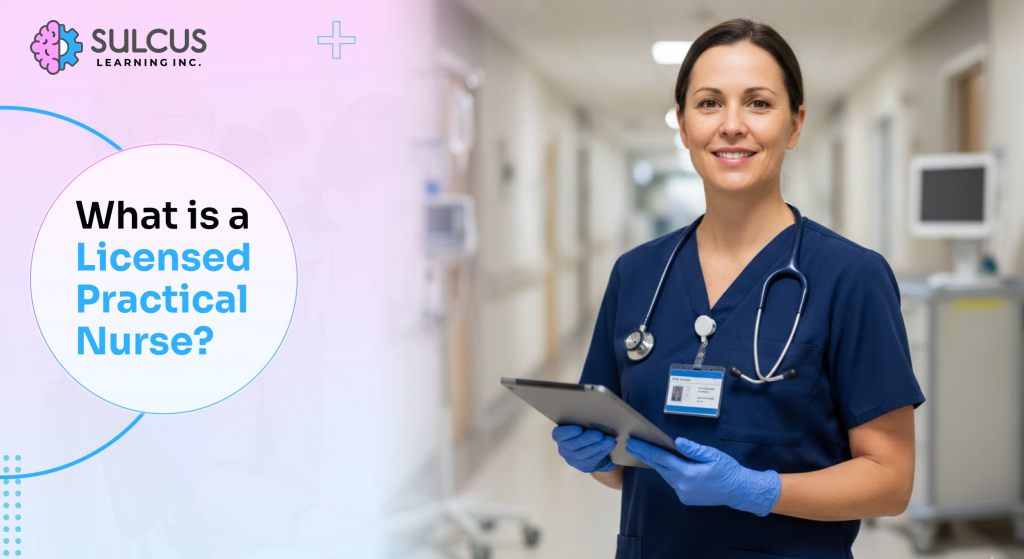
Have you ever asked yourself, “What is a Licensed Practical Nurse?”
An LPN (Licensed Practical Nurse) is a healthcare professional who cares for patients under the supervision of a physician and RN. From checking vital signs to bandaging wounds and providing emotional support, they are the backbone of patient care.
The licensed practical nurse role would be ideal for someone who wants to make a difference in healthcare without spending years in medical school. With a growing healthcare system, there will be many opportunities for you to become an experienced practical nurse with never-ending job security.
If you want to know more about the meaning of LPN, what do Licensed Practical Nurses do, or how to become an LPN, then this guide is for you. Here, we cover everything about licensed practical nurse requirements, salary and career growth in 2026.
Who is a Licensed Practical Nurse?
A Licensed Practical Nurse (LPN), also known as a Licensed Vocational Nurse (LVN) in some states, is a professional middle-level practitioner in the nursing field. The work of an LPN is all about helping RNs and physicians to handle patient health most effectively.
They bridge the gap between patient and medical team while maintaining safety and comfort throughout the process. An LPN nurse can work in several healthcare settings, such as hospitals, nursing homes and provide care for patients on a daily basis. If you’re passionate about compassionate care, the LPN career path offers a fulfilling and respected position in the medical field.
What Does a Licensed Practical Nurse Do?
So, what does an LPN nurse do after all? The LPN description includes monitoring patient health, vital signs, administering medications and keeping track of records.
The Licensed Practical Nurse also helps with wound care, hygiene and feeding, which makes them the backbone of bedside care. In addition to the medical responsibilities, LPNs provide a source of emotional strength and comfort for patients as well as their families.
In other words, what a licensed practical nurse does is a bit of everything for healthcare, and they are also known as healthcare’s multitaskers. They may have a slightly different scope of practice from state to state or province to province, but their contribution is critical everywhere.
Key Skills and Qualities of an LPN
A great Licensed Practical Nurse (LPN) is even more than just professionally inclined — they’re caring, adaptable, and detail-oriented. The necessary LPN skills include strong communication, teamwork, critical thinking, and time management.
Since they often serve as the primary link between patients and doctors, empathy and patience will serve you well. Practical skills like giving injections, taking vital signs and recording information are also key.
LPNs also need to be emotionally strong to handle difficult or stressful situations. An LPN combines technical proficiency with compassionate care, attending to not only patients’ physical symptoms, but also their emotional and social needs—becoming a trusted member of the patient’s care team.
Educational Requirements to Become an LPN
To become a licensed practical nurse, the candidate must complete an official LPN training program lasting approximately 12-18 months. These courses combine traditional classroom lecture with a clinical hands-on aspect. Introductory courses such as anatomy, pharmacology and the strategies for providing patient care are covered.
After completing your LPN education requirements, you will need to take a national licensing examination (NCLEX-PN in the U.S., CPNRE in Canada). In Canada, this means following a specific CPNRE Exam Guide or the RExPN Exam Guide depending on your province. Upon licensure, you can obtain a fulfilling career as a Licensed Practical Nurse in an array of medical facilities, including hospitals or rehab facilities.
How to Become a Licensed Practical Nurse
Curious about how to become a Licensed Practical Nurse? Here’s your roadmap:
- Earn your high school diploma or GED: This is how you become eligible.
- Enroll in an accredited LPN program: Make sure it is sanctioned by the state nursing board where you live.
- Complete clinical training: On-site experience provides practical, hands-on skills.
- Pass the NCLEX-PN or CPNRE exam: This is how you’ll get your license to practice. To prepare, check the CPNRE Exam Schedule early.
- Apply for state licensure – They all have different requirements and fees.
- Start your career and grow – LPNs can specialize or bridge into RN programs later.
When you follow these steps to become an LPN nurse, you ensure that you are meeting all of the qualifications, standards and educational requirements necessary to start a solid career in healthcare.
LPN Salary and Career Outlook in 2026
One of the most common questions was “What is a licensed practical nurse’s salary in 2025?” So, on average, the Licensed Practical Nurse salary ranges from $50,000 to $70,000 per year it’s depending on the location, experience, and specialization. In certain provinces, you might also want to compare this to the Registered Practical Nurse Salary to see the full pay scale.
The licensed practical nurse job outlook for 2026 remains strong due to rising healthcare needs and an ageing population. With flexible schedules, job stability, and numerous opportunities, it’s one of the most practical and rewarding careers in the healthcare industry today.
LPN vs RN: Understanding the Difference
The main differences between LPNs and RNs lie in education, responsibilities, and pay scales. LPNs complete shorter programs and focus on direct patient care, while RNs hold associate or bachelor’s degrees and handle more complex medical duties and decision-making. When comparing Licensed Practical Nurse vs Registered Nurse, both roles are essential, but LPN is the fastest route into the profession. You can also view our RPN vs RN breakdown for more specific details.
Simply put, LPNs provide the care, and RNs coordinate and evaluate it. When it comes to LPN vs RN, both roles are essential, but becoming an LPN is often the fastest route into the nursing profession and provides valuable hands-on experience.
Career Opportunities for Licensed Practical Nurses
The LPN career path opens doors to a variety of healthcare settings. LPNs can work in hospitals, long-term care facilities, physician offices, rehabilitation centers, or even home healthcare. With experience, they may specialize in areas such as paediatrics, geriatrics, or palliative care.
Ambitious LPNs in Canada can also advance into Registered Nurse roles, healthcare administration, or nursing education through bridge programs and continued studies.
The best provinces for Licensed Practical Nurse jobs in Canada include Regina, Ontario, Alberta, and British Columbia, where demand and pay are notably higher.
Whether in hospitals, long-term care homes, or community clinics—wherever compassionate care is needed, there’s always an opportunity for a skilled Licensed Practical Nurse.
Why Choose a Career as an LPN?
Choosing to become a Licensed Practical Nurse in Canada means entering a field that blends compassion with career security. LPNs enjoy a meaningful profession, flexible shifts, and opportunities to grow into advanced roles.
For many, the LPN meaning goes beyond a job, it’s a calling to care, heal, and connect. With rising demand, stable income, and quick entry into the workforce, this role offers the perfect start for anyone passionate about healthcare. Plus, with so many LPN training programs, your dream of becoming a nurse is more achievable than ever.
Boost Your LPN Exam Success with Sulcus Learning
Are you planning or preparing for the CPNRE or REx-PN exam?
Sulcus Learning is the leading online prep platform for nursing licensure, built to help future nurses master every concept with ease. Whether you need CPNRE Exam Tips or RExPN Exam Tips, our AI-driven tools personalize your journey.
With AI-driven tools, adaptive learning modules, and expert mentorship, it personalizes your prep journey, turning weaknesses into strengths.
Practice with real exam-style questions, track your progress, and build lasting confidence. Join thousands of aspiring nurses who trust Sulcus Learning to succeed.

Conclusion
A Licensed Practical Nurse plays an irreplaceable role in patient care—balancing skill, compassion, and dedication. From bedside assistance to emotional support, they make healthcare humane and accessible.
Now that you know what a Licensed Practical Nurse is and the steps to become one, it’s time to turn that passion into a profession. The journey may be short, but the impact lasts a lifetime. Your path to nursing starts here, and the world needs more hearts like yours.
FAQ’s
Q1. What is the role of a Licensed Practical Nurse?
Ans. A Licensed Practical Nurse provides essential bedside care, monitors patient health, administers medications, and supports doctors and registered nurses in delivering quality healthcare services.
Q2. How long does it take to become an LPN?
Ans. Becoming an LPN usually takes 12–18 months, combining classroom study, clinical training, and hands-on practice through an accredited practical nursing program or diploma course.
Q3. What qualifications do you need to be an LPN?
Ans. To become an LPN, you need a high school diploma, completion of an approved nursing program, and passing the NCLEX-PN or CPNRE licensing exam.
Q4. What is the average salary of a Licensed Practical Nurse?
Ans. The average salary of a Licensed Practical Nurse ranges between $50,000–$70,000 annually, depending on experience, location, healthcare facility, and specialization within the nursing field.
Q5. Can LPNs become RNs later?
Ans. Yes, LPNs can become Registered Nurses by enrolling in LPN-to-RN bridge programs that expand nursing education, clinical expertise, and career advancement opportunities.

Harry Sagar
Passionate and detail-oriented leader at Sulcus Learning, dedicated to supporting internationally educated nurses in achieving their professional goals. With experience as a general practitioner, smoking cessation consultant, and licensed practical nurse, I combine clinical expertise with mentorship. Guided by the philosophy, “Your Success is Our Ambition,” I help nurses gain confidence, competence, and career-ready success.