
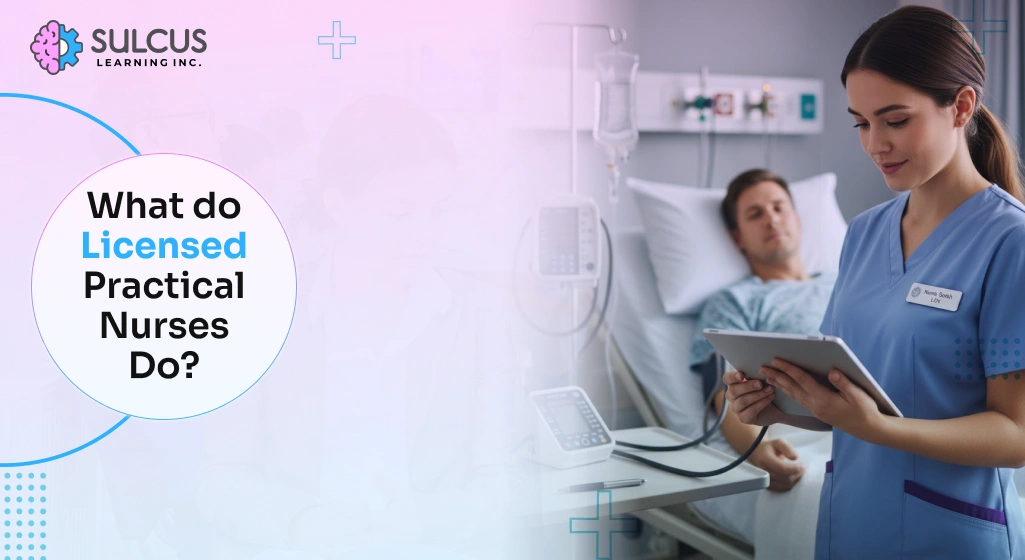
In Canada, Licensed Practical Nurses (LPNs) play a pivotal role in client care and serve as vital members of the interprofessional healthcare team. LPNs provide and coordinate compassionate nursing and emotional care support within their autonomous and collaborative scope of practice.
Many people wonder, “What do licensed practical nurses do?” especially when comparing roles like Licensed Practical Nurse vs Registered Nurse. LPNs perform a variety of client care functions, including routine and daily care, vital sign assessments, and client monitoring.
LPNs provide care across various settings which include hospitals, community clinics, long-term care, and home health, collaborating with registered nurses, physicians, and allied health professionals.
Their work isn’t just about tasks; it’s about compassion, accuracy, and teamwork. With the increasing demand for skilled nursing professionals, understanding the licensed practical nurse job description helps aspiring nurses prepare for a fulfilling and stable career.
What Do Licensed Practical Nurses Do?
LPNs perform and coordinate clinical care within a health team, ensuring the smooth operation of each shift and unit.
In long-term care facilities, they provide direct care, supervise care aides, personal attendants, and support workers, and ensure quality standards are met. In complex or unstable care environments, LPNs deliver hands-on care while supporting individuals in prioritizing tasks and achieving desired outcomes.
In care facilities, LPNs work collaboratively within nursing teams, implementing nursing interventions as part of the client’s care plan and collaborating with registered nurses and other professionals to achieve desired health outcomes.
Licensed Practical Nurse Job Description: A Day in the Life
A day in the life of a licensed practical nurse includes duties such as client care, administering prescribed treatments, and recording client information in a health record. During client care, they also observe and report their findings to a registered nurse.
A licensed practical nurse job description also emphasizes requirements such as cooperation with health care team members and documentation of care and treatment outcomes, similar to what is expected in the CPNRE vs. the NCLEX exam standards. A Job description for a licensed practical nurse often highlights teamwork, attention to detail, and compassion.
A typical day may begin with preparing clients for procedures or rounds, followed by medication administration, wound care, client education, and documentation. Adaptation to the different duties of a practical nurse is an excellent benefit for a health care professional.
Key Licensed Practical Nurse Job Duties and Responsibilities
A practical nurse’s responsibilities include numerous general and supportive clinical functions.
Among the clinical functions of an LPN are conducting focused assessments, administering medications and treatments (including IV therapy where authorized), monitoring vital signs, and assisting clients with daily living activities.
They help clients emotionally, explain care plans, and guide them in adhering to prescribed nursing interventions.
LPN clinical responsibilities also involve documenting care, monitoring client progress, and consulting or collaborating with Registered Nurses (RNs) or physicians when the client’s condition becomes more complex or unpredictable.
Long-term care facilities, rehabilitation centers, and hospitals will all require the duties of a licensed practical nurse.
Carrying out the defined duties enables LPNs to protect clients’ safety and welfare. Recognizing these duties will help prospective practical nurses meet their expectations and succeed in the healthcare support system, especially when preparing for the CPNRE exam using the CPNRE exam tips.
Where Do Licensed Practical Nurses Work?
LPN assignments are diverse across hospitals, long-term care homes, rehabilitation centers, community clinics, and home health services. Some LPNs concentrate on maternal, pediatric, or geriatric care.
Providing long-term care for aged and chronically ill clients centers around emotional and psychological aspects as well as core LPN functions. This ability to change is vital, and the ideal practical nurse candidate will appreciate this effort.
So, where do LPNs work? Practically anywhere hands-on client care is needed, it is essential to prepare effectively for the CPNRE exam.
Essential Skills Required for LPNs
The practice of a Licensed Practical Nurse encompasses a broader range of skills than just clinical knowledge. Clinical skills, having an eye for detail, and safe medication administration are vital.
For an LPN, having effective and empathetic communication, as well as problem-solving skills, is equally fundamental when you study for CPNRE and real-world scenarios. Supervising client care requires LPNs to have considerable patience, as well as being observant and adaptable.
Furthermore, the ability to collaborate with Registered Nurses and other healthcare providers is fundamental.
The range of duties assigned to LPNs, spanning from client observation to record keeping, directly stems from the attributes discussed above. Such qualities empower LPNs to uphold the healthcare system’s standards and to execute their duties efficiently.
LPN vs RN: Understanding the Difference
The distinctions between LPNs and RNs arise from the scope of practice and responsibilities assigned to each.
LPNs provide direct client care, administer medications, and assist with daily living tasks, while RNs are responsible for assessing, planning, and overseeing client care.
Both professions are key to the functioning of the healthcare system, and their collaboration enables integrated, holistic client care. Understanding the differences between LPNs and RNs helps aspiring nurses choose the right career path and aligns with insights into what a licensed practical nurse is.
Growth Opportunities & Career Advancement for LPNs
The career of a licensed practical nurse in Canada details various ways to advance a person’s career. They can focus on pediatrics, geriatrics, or palliative care.
Many LPNs pursue bridging programs to become Registered Nurses (RNs) through recognized PN–RN pathways, while others expand into leadership, education, or specialized clinical roles.
Further education, certification, and the acquisition of leadership roles in a practice also serve as pathways for professional growth.
With the increasing need for skilled healthcare practitioners in Canada, the career as an LPN is financially stable, including competitive insights into the licensed practical nurse salary.
How to Become a Licensed Practical Nurse in Canada?
For each province and territory in Canada, the path is the same. You must first complete an approved practical nurse training program, which takes 1–2 years.
Step 1: Register with a relevant college or university that offers an accredited practical nurse training program.
Step 2: Complete the required courses on anatomy, pharmacology, fundamentals of client care, and clinical procedures.
Step 3: Participate in supervised clinical practice in hospitals, clinics, or long-term care facilities.
Step 4: Achieve passing results in the certification exam (CPNRE or RExPN) and understand how long CPNRE results take after completion.
Step 5: Register for a provincial license with the regulatory body. Stay updated with the CPNRE exam schedule to plan your preparation timeline effectively.
Step 6: Register with your provincial regulatory authority (e.g., CLPNA, BCCNM, CLPNNS, SALPN) and maintain ongoing competence through continuing education and professional development
Following these steps provides a solid pathway for success in the nursing profession.
Exam Prep Made Simple with Sulcus Learning
At Sulcus Learning, nursing students gain access to expertly developed question banks, full-length mock tests, and intelligent analytics designed by experienced Canadian nursing educators for CPNRE and REx-PN preparation.
Personalized study plans highlight areas needing improvement, while mnemonics and bright notes boost retention. Trusted by nursing students across Canada, Sulcus Learning combines AI-driven tools with expert-curated content.
Preparing with Sulcus ensures candidates understand what licensed practical nurses do in practice, excel on exams, and check CPNRE results efficiently. Start your free trial today and prepare smarter for your nursing career!
Wrapping Up
Licensed Practical Nurses play a pivotal role in client care, combining compassion with clinical expertise and accountability within their collaborative scope of practice. Understanding the licensed practical nurse job description, duties, and growth opportunities equips aspiring nurses for success.
From hospitals to long-term care, LPNs provide essential support that keeps healthcare systems running smoothly. Whether you’re exploring a career or preparing for licensing exams, embracing the role fully ensures professional satisfaction and personal fulfillment. LPNs are truly the heart of hands-on healthcare.
FAQ’s
Q1. What do Licensed Practical Nurses do?
Ans. LPNs provide direct patient care, assist with daily living activities, monitor vital signs, administer medications, document patient progress, educate patients, and collaborate with healthcare teams to ensure safe, effective, and compassionate care.
Q2. What is a licensed practical nurse job description?
Ans. A licensed practical nurse job description includes providing hands-on patient care, administering medications, documenting health records, assisting with treatments, monitoring patient conditions, and working closely with RNs and physicians to deliver quality healthcare.
Q3. What are the licensed practical nurse job duties?
Ans. Licensed practical nurse job duties include clinical care, medication administration, patient education, emotional support, vital signs monitoring, charting medical information, collaborating with healthcare teams, and ensuring patients follow prescribed treatment plans safely and effectively.
Q4. Where do LPNs work?
Ans. LPNs work in diverse healthcare settings, including hospitals, clinics, rehabilitation centers, long-term care facilities, and home healthcare environments, providing essential patient care, monitoring health, and supporting physicians and registered nurses in their daily duties.
Q5. How is an LPN different from an RN?
Ans. LPNs focus on hands-on patient care, assisting with daily needs and treatments, while RNs plan, assess, supervise care, make critical decisions, and oversee the work of LPNs to ensure comprehensive healthcare delivery.

Harry Sagar
Harry is a strategic leader at Sulcus Learning, developing exam-aligned learning solutions. With expertise in adaptive testing and clinical education, he supports learners in achieving confidence, competence, and readiness.