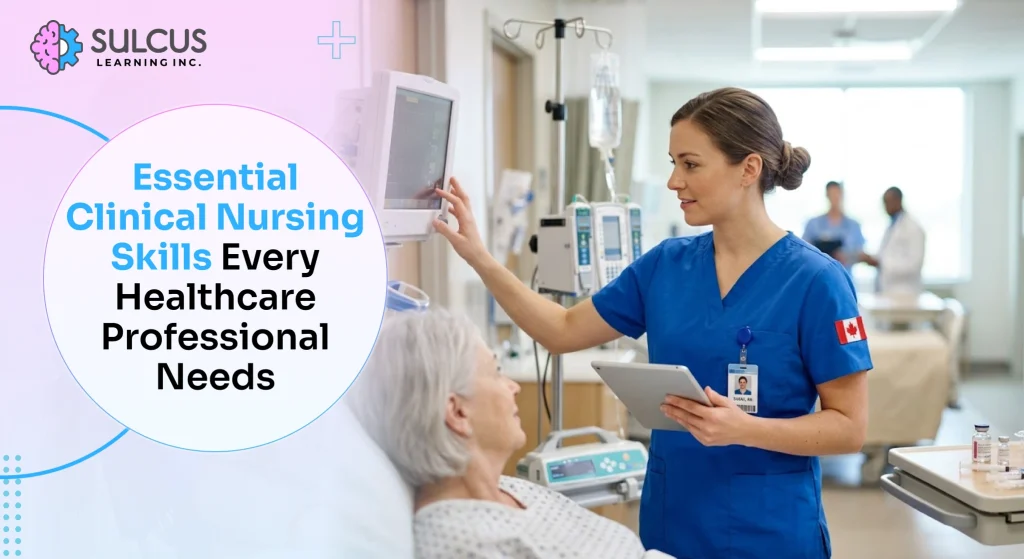
Canada has recently experienced one of the most significant changes in its healthcare industry. There has recently been a dramatic increase in the demand for community nursing services because of the aging population and the increasing population of individuals experiencing chronic illness. The Canadian Institute for Health Information estimates the country will need an additional 117,000 registered nurses (RNs) by 2030. This statistic demonstrates the importance of the quality of nursing graduates.
However, becoming an excellent nurse is much more than passing the NCLEX-RN, REx-PN, or CPNRE. A real foundation of nurse competence must be built with skills that can be relied on during the actual care of clients. Whether you are a nursing student looking forward to your initial clinical placement or are a qualified nurse wanting to advance in your career, knowing the vital competencies is the first step.
This guide covers the clinical nursing skills that every health professional needs. These skills and competencies include emotional intelligence, communication skills, critical thinking, and the safe administration of medications. In Canada, nursing students have gaps in knowledge between the classroom and preparation for their professional exams. We discuss how Sulcus Learning is bridging that gap.
Why Clinical Nursing Skills Matter in Modern Healthcare
Working in a clinical environment requires a specific set of skills and expertise. A nurse starting a 12-hour shift on the medical-surgical unit is walking into a high-stakes challenge that requires them to use independent judgment. A busy unit means a nurse is continually engaging in micro-decisions, managing their relationships with the clients and their families, and collaborating with other members of the interdisciplinary unit and the medical staff, while always ensuring safety and preserving the dignity of the clients.
The specific set of clinical skills necessary for employment as a nurse is the complete package of technical expertise and the complementary staff attitudes. These skills combine to provide clients with care that is safe, effective, and compassionate.
Numerous studies confirm that the presence of a nurse with strong fundamental skills on the hospital staff contributes to shorter recoveries, fewer negative outcomes, and greater satisfaction with the care received by the clients. In a logically organized health and safety system that is under pressure, skilled nursing is essential.
What Are Clinical Nursing Skills?
Clinical nursing skills encompass both technical (hard) skills and interpersonal (soft) skills that enable nurses to deliver safe, holistic care across all healthcare settings. They can be broadly divided into:
- Technical skills: procedures, assessment techniques, equipment use, and medication administration
- Cognitive skills: critical thinking, clinical judgment, and problem-solving
- Interpersonal skills: communication, empathy, teamwork, and emotional intelligence
- Organizational skills: time management, prioritization, and documentation
In the context of Canadian nursing examinations and professional practice standards, clinical skills are mapped directly to competencies defined by bodies such as the National Council of State Boards of Nursing (NCSBN), the Canadian Nurses Association (CNA), and provincial regulatory colleges. Mastering these skills is not optional, it is the professional and ethical obligation of every nurse.
Core Clinical Nursing Skills Every Healthcare Professional Needs
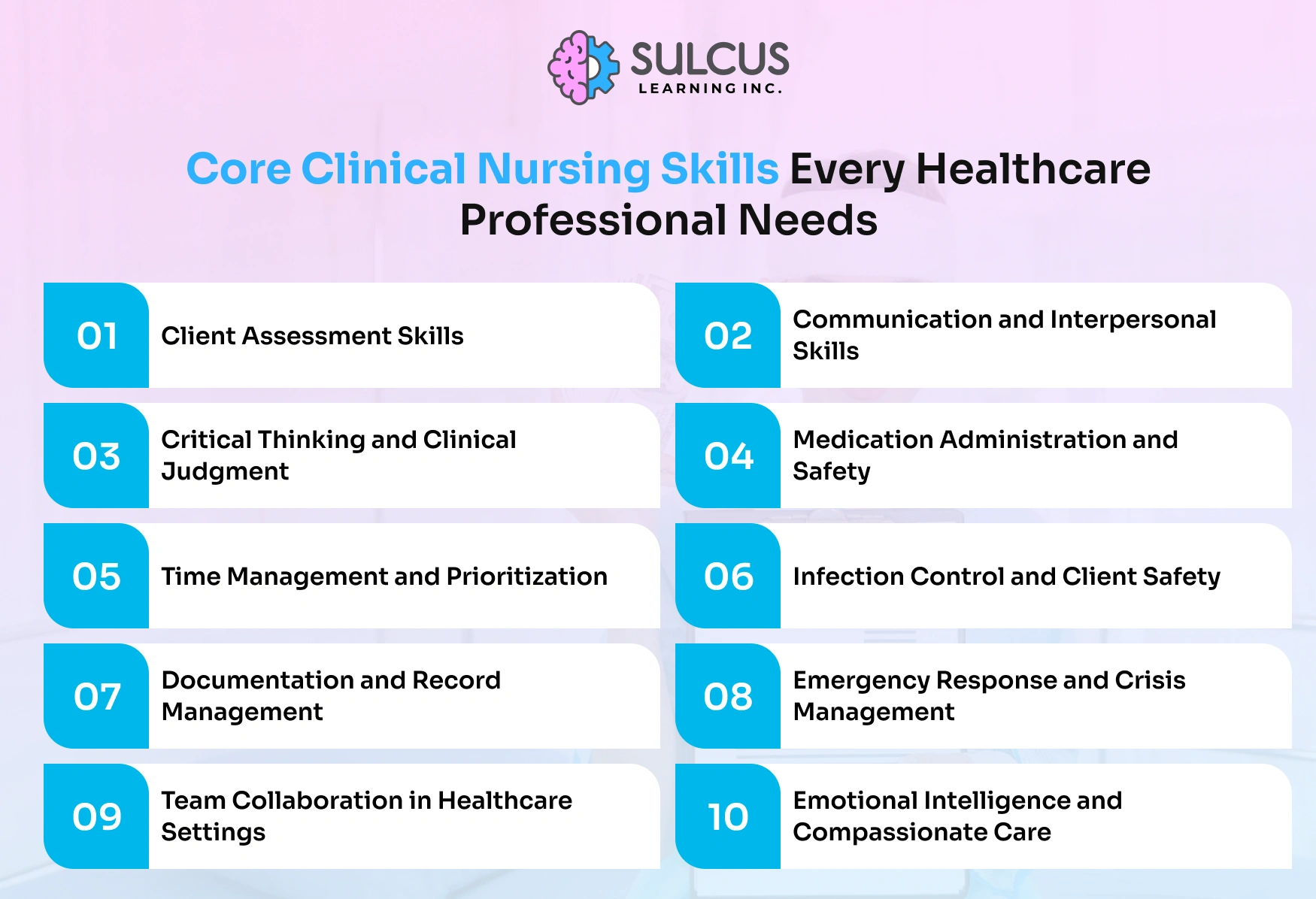
There are many numerous applications of nursing practice, but safe and effective practice is dependent upon a range of strong nursing competencies. The most important of these is client assessment.
1. Client Assessment Skills
Client assessment skills form the foundation of every nursing intervention. To develop a plan for care, nurses begin by obtaining a wealth of information on the physical, mental and social condition of the client. This may include head-to-toe physical assessments, vital signs, and laboratory results, and may involve further monitoring or measurement of the client’s condition.
Nursing exams in Canada put a lot of value on assessment skills. Advanced assessment skills allow the nurse to capture the early signs of a client’s declining condition, be it a subtle sign of developing respiratory distress, the presence of sepsis, or an agitation that may predispose the client to a fall.
Assessment skills require several rounds of practice, guided clinical exposure, and the ability to synthesize clinical client data and reported symptoms. This is the kind of critical thinking that is tested in board examinations.
2. Communication and Interpersonal Skills
If you want to know what makes an exceptional nurse, ask the experts. They’ll tell you that effective communication is key. Many think communication is about relaying information. Therapeutic communication is about identifying and understanding individual client needs through listening skills, being able to interpret and respond to body language, creating a trusting and safe environment, and having the fortitude to provide difficult feedback.
Considering Canada’s diverse population, multiculturalism necessitates the need for dynamic communication skills among healthcare workers. This involves tailoring one’s communication to accommodate various linguistic, cultural, and health literacy needs. This may include the effective use of interpreters, simple language, and cultural humility.
Communication skills also extend to teamwork. Collaboration, handoff reports, and safety SBAR (Situation, Background, Assessment, Recommendation) communication, and interdisciplinary rounds all require accurately framed communication.
3. Critical Thinking and Clinical Judgment
Clinical judgment describes the ability to determine the right course of action in a particular situation and assess the consequences of taking that action. This ability distinguishes nurses who understand the reasoning behind certain protocols and the right moments to challenge them.
The Next Generation NCLEX (NGN) has clinical judgment at the forefront of exam restructuring, and the Clinical Judgment Measurement Model (CJMM) highlights the importance of the ability to recognize cues, evaluate data, establish priorities of hypotheses, construct a plan, take action and reflect on the consequences. These are thought processes that pervade every hour of a nurse’s shift.
Memorizing content is not sufficient for the development of clinical judgment. It requires the evaluation of sophisticated client situations, the practice of structured decision-making, and the incorporation of reflexive practice into your routine. You should ask yourself after every scenario, “What did I see? What was my response? What would I change?”
4. Medication Administration and Safety
The administration of medications accounts for a substantial percentage of avoidable adverse events towards clients in Canada. Safe practice of medication administration is one of the most dangerous yet most serious and ethically intricate tasks that a nurse is responsible for.
The foundational framework of the “Ten Rights” of medication administration includes the right client, drug, dose, route, time, and documentation, as well as the right reason, response, education, and right to refuse. In the context of medication safety, a nurse also has the responsibility to know the pharmacology of the medications being administered, be aware of drug interactions and the importance of adjusting doses based on renal and hepatic function, and recognize and respond to high-alert medications.
This is a skill learned through practice, routine study, and an environment of psychological safety that promotes a concern-raising culture within the organization, whereby staff are not blamed when concerns are raised.
5. Time Management and Prioritization
The time management of a nurse who is caring for five critically ill clients on a busy unit must be effective, leaving no time for inefficiency. Time management in nursing emphasizes the practice of smarter work instead of harder work, and the application of clinical frameworks like ABC (Airway, Breathing, Circulation) and Maslow’s Hierarchy to prioritize needs and interventions.
Prioritizing effectively means knowing which tasks are most urgent and which steps can wait. This includes knowing which documentation can be done between tasks. Providing safe care should not be compromised. Like most skills, learning to prioritize improves with practice. It should be cultivated purposefully over the course of clinical training.
6. Infection Control and Client Safety
Infection Prevention and Control (IPC) is a unique nursing responsibility that features a duty of care to clients and colleagues alike. Practices of proper hand hygiene and donning/doffing of personal protective equipment (PPE) demonstrate some of the most evidence-based practices in the healthcare system.
In the post-pandemic period, Canadian healthcare systems have put more robust Infection Prevention and Control (IPC) measures in place. Nurses are expected to differentiate standard from transmission-based precautions, understand the principles of antimicrobial stewardship, and recognize healthcare-associated infections (HAIs) early.
7. Documentation and Record Management
Nurses must live by the motto “If it wasn’t documented, it wasn’t done”. This essential component of nursing practice supports medicolegal accountability. Documentation must be completed thoroughly, timely, and objectively. Proper documentation supports client safety and care continuity, while it decreases the institution’s liability.
Today, documentation in nursing is predominantly electronic. This requires proficiency with electronic health record (EHR) systems. Documentation of assessments, interventions and responses must be done clearly and without ambiguity. Documentation errors are the leading source of clinical errors and professional risk.
8. Emergency Response and Crisis Management
Whether it is the occurrence of sudden cardiac arrest or the rapid deterioration of a client’s neurological status, nurses are frequently first responders to clinical emergencies. The ability to use tools like the Modified Early Warning Score (MEWS), the National Early Warning Score (NEWS), and others, to recognize the early signs of deterioration and escalate appropriately, all have the potential to save a life.
Emergency response skills involve the ability to effectively perform BLS/CPR, perform rapid client assessment, and initiate emergency responses, as well as the ability to communicate rapidly in emergency situations. These skills require both the knowledge to do so as well as the psychological composure to act.
9. Team Collaboration in Healthcare Settings
Nursing is the most collaborative profession. The teamwork in nursing starts with the interaction with the physicians and extends to the physiotherapists, pharmacists, social workers, dietary staff, and the family of the client. Team collaboration is accomplished with mutual respect, clear roles, open communication, and a total commitment to the client.
The healthcare system in Canada understands the significance of interprofessional collaboration. Nurses fostering these relationships effectively reduce redundant care, mitigate errors during transitions, and enhance the continuum of care for clients.
10. Emotional Intelligence and Compassionate Care
Nursing is one of the fields where workers meet the suffering of others every single day. Emotional intelligence is the ability to be aware and considerate of the feelings of others as well as control one’s emotions, and is considered more of a hard skill and less of a soft skill.
Risk of compassion fatigue is counterbalanced with professional boundaries and self-care. Nurses who provide compassionate care benefit from seeing the reduced anxiety of clients, the improved adherence to the treatment, the stronger therapeutic relationships, the better health outcomes of the clients, and the reduced risk of compassion fatigue.
For Canadian nursing students, the first components of emotional intelligence are peer supervision and reflective practice, along with mentorship from veteran clinicians who emphasize empathy and clinical proficiency.
Technical vs. Soft Skills in Nursing
A common misconception among nursing students is that technical skills, wound care, IV insertion, urinary catheterization, are the “real” nursing skills, while communication and empathy are nice-to-haves. The evidence tells a different story.
| Category | Examples | Impact on Client Care |
|---|---|---|
| Technical Skills | IV insertion, wound care, medication administration, catheterization, vital sign monitoring | Directly reduces complications, improves treatment accuracy, and minimizes adverse events |
| Soft Skills | Communication, empathy, teamwork, critical thinking, and cultural competence | Enhances client trust, improves care coordination, and increases treatment adherence |
| Cognitive Skills | Clinical judgment, prioritization, evidence-based decision-making | Helps prevent diagnostic errors, supports faster interventions, and improves client outcomes |
How Nursing Skills Improve Client Outcomes
There are many studies that provide literature to support the theories that nursing competency is directly linked to better client outcomes. It has also been shown that when there is a higher nurse-to-client ratio, coupled with the development of advanced nursing skills, the outcomes improve, as evidenced by lower levels of client mortality in the hospital, lower levels of nosocomial infection, fewer incidences of pressure ulcers, and overall better control of the post-operative state of the clients.
In Canada, the health authorities of the provinces have emphasized a nursing education system based on the competencies for the very reason that the data on client outcomes demonstrate the return on investment for qualified nursing practice. Every hour spent building up skills related to the core aspects of practice of safe and effective nursing contributes directly to the provision of a safer environment for clients.
Common Challenges Nurses Face While Developing Clinical Skills
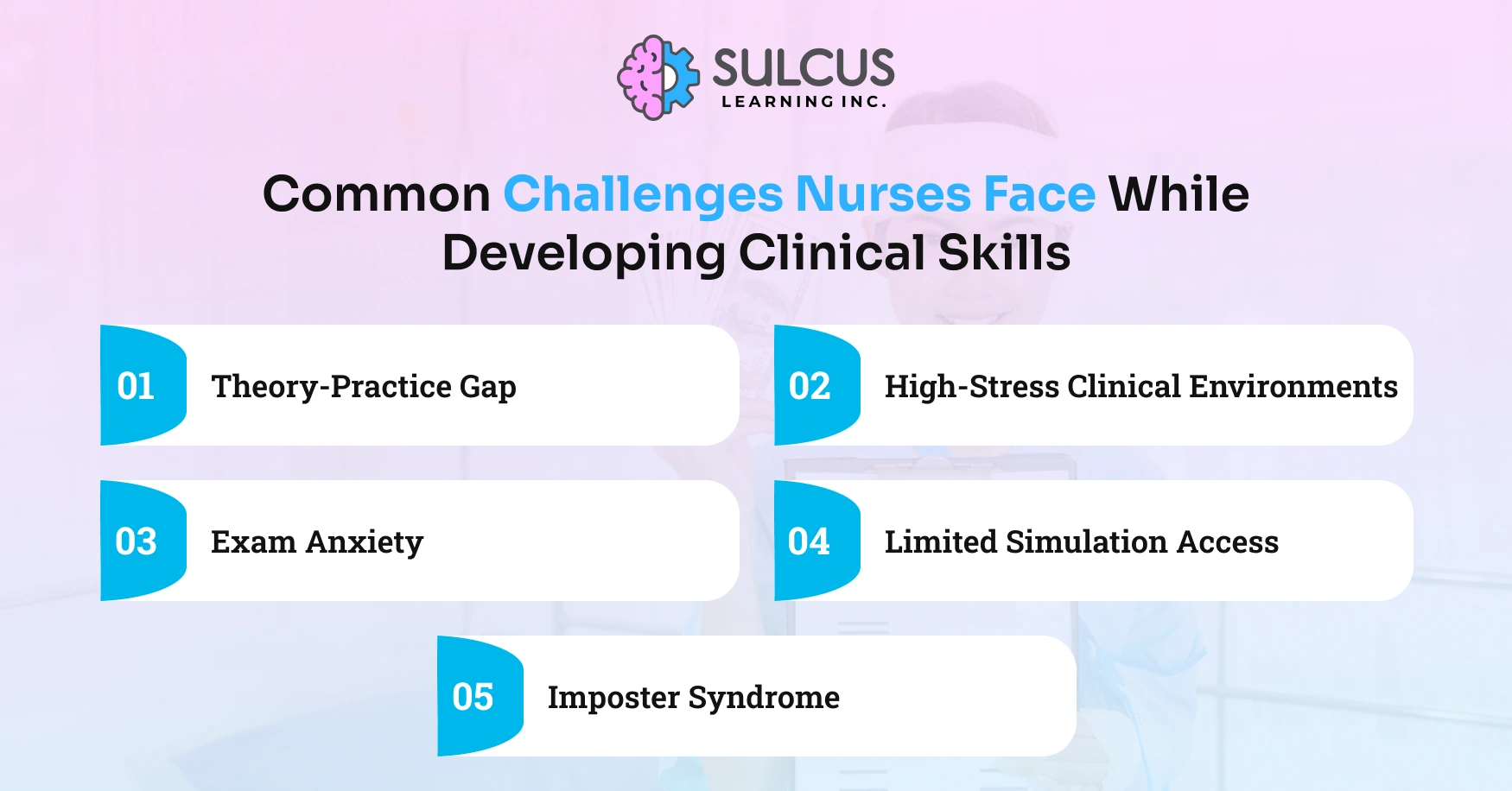
From student to clinician, the fulfillment of nursing’s various roles is a complex journey. Here are some challenges encountered by aspiring clinicians:
- Theory-Practice Gap: There is almost certainly a gap between the clinical realities and the teaching of nursing theory. As a result, this introduces a degree of anxiety and uncertainty to the new graduate.
- High-Stress Clinical Environments: New nursing staff experience difficulties in building upon newly acquired skills because of insufficient staffing levels and high client acuity.
- Exam Anxiety: New graduate nurses anticipating undertaking the NCLEX or REx-PN exams often experience a lack of confidence, often because of the pressure associated with board exams, even when they possess adequate knowledge. Understanding common mistakes in Canadian nursing licensure exams can help candidates avoid preventable score reductions.
- Limited Simulation Access: Not all nursing programs have the luxury of high-fidelity simulation labs or standardized client experiences.
- Imposter Syndrome: A great deal of nursing and newly graduated nurses possess a degree of self-doubt, having the desire to be an achiever, but they possess the knowledge to be a success.
Best Ways to Improve Clinical Nursing Skills
Developing strong clinical nursing skills is a deliberate, ongoing process. These strategies have proven effective for Canadian nursing students and early-career nurses:
- Engage in deliberate practice, regularly review clinical scenarios, not just textbook content
- Seek feedback actively from clinical supervisors and preceptors
- Use reflective journaling to process clinical experiences and identify learning gaps
- Participate in simulation labs and case-based learning whenever possible
- Study with exam-focused mock tests and practice exam platforms that replicate real board examination formats.
- Join study groups that encourage peer teaching and collaborative reasoning
- Read current clinical guidelines from the Canadian Nurses Association and provincial regulatory colleges
- Prioritize self-care to maintain the psychological resilience that clinical work demands
How Sulcus Learning Helps Nurses Build Real-World Clinical Skills
For Canadian nursing students preparing for NCLEX-RN, NCLEX-PN, REx-PN, or CPNRE, choosing the best online prep platform for nursing can significantly improve readiness and confidence. That’s why Sulcus Learning Inc. was created, and proudly Canadian, globally trusted, and universally successful. Sulcus is a competency-based, analytics-driven learning ecosystem and fills the gap between your studies and being ready for exams.
Exam-True Practice for NCLEX, REx-PN, and CPNRE
With Sulcus Learning, you can access exam-aligned question banks designed to capture the exact format, level of difficulty, and clinical reasoning of the Canadian and North American nursing board exams. Practice sections are built around the full spectrum of NCLEX-style NGN question formats, from stand-alone items to bow-tie questions, matrix grids, and trend items, as well as REx-PN MCQ, SATA, fill-in-the-blank, and exhibit questions.
Sulcus is the only resource that offers CPNRE-aligned case studies and MCQ practice, which are grounded in the Canadian Practical Nurse Registration Examination competency framework. Sulcus Learning ensures candidates embark on their exam journey equipped with clinical reasoning skills for their professional nursing practice.
Adaptive Learning and Clinical Judgment Training
Sulcus Learning uses adaptive technology to design and personalize individual student learning journeys. During practice sessions, the platform identifies students’ strengths and skill gaps. The Sulcus Learning platform ensures that students receive questions focused on the skills that need the most development.
Sulcus Learning provides advanced, intelligent practice sessions that are designed to resemble the Computerized Adaptive Testing (CAT) practice that is used in the NCLEX-RN and NCLEX-PN examinations.
Every question that Sulcus Learning provides includes clinical judgment. Practice sessions challenge students to go further than the basic recall. Sulcus Learning provides questions that challenge students to engage in skilled nursing practice activities such as identifying cues, analysis, and prioritization.
Competency-Based Performance Analytics
Sulcus Learning offers the tools necessary to cultivate understanding through its performance analytics dashboard. The Competency Wheel shows students their readiness for each of the competency domains, giving them direction on what areas to focus their studies on. The Predictometer gives students a readiness score that predicts their success on their upcoming exam.
The Exam Percentage Growth Charts allow students to visualize the improvement that they have made longitudinally. Features like the Performance Ranking System and the Top 10 Students Leaderboard create a positive, competitive atmosphere that encourages students’ participation. The Student Exam Reports, or we can say Candidate Performance Report, illustrate the results and provide detailed analytics of each individual student.
Personalized Readiness Tracking and Study Plans
At Sulcus Learning, emphasis is placed on the understanding that all nursing journeys vary, and the analysis of Strengths and Limitations enables students and educators to understand where there is a need for additional support. If students have poor performance in pharmacology, clients’ physiological adaptation pace, or prioritization of sophisticated clients’ care, the analytics of Sulcus Learning offer guidance that can be helpful prior to the examination.
For nursing students and their professors in Canada, Sulcus Learning provides a platform that extends beyond exam preparation to the enhancement and development of nursing practices and competencies to develop safe practice.
The Role of Technology in Modern Nursing Practice
By 2026, nurses will need advanced clinical skills beyond those traditionally used at the bedside. Nursing now includes digital health literacy and the ability to use, interpret, and apply electronic health records, remote monitoring devices, telehealth and telemedicine systems, and clinical decision support systems.
According to some reports, Canadian healthcare facilities continue to invest in digital health infrastructure. Nurses who confidently navigate digital tools meaningfully influence care efficiency and client safety. Comfort with health technologies during clinical training is now a requisite. More than ever, the incorporation of technologies into clinical training is essential.
Clinical Nursing Skills Employers Look for in 2026
Canadian healthcare employers, from major academic health centres to community hospitals and long-term care facilities, are looking for nurses who demonstrate the following competencies:
- Advanced client assessment and clinical decision-making
- Proficiency in electronic health record documentation
- Strong communication skills in diverse, multicultural care environments
- Demonstrated ability to work in interprofessional teams
- Evidence-based practice orientation, the ability to apply current clinical research to bedside decisions
- Adaptability and resilience in fast-changing clinical settings
- Cultural safety and Indigenous cultural humility are particularly important in Canada’s healthcare context
Future Trends Shaping Nursing Competencies
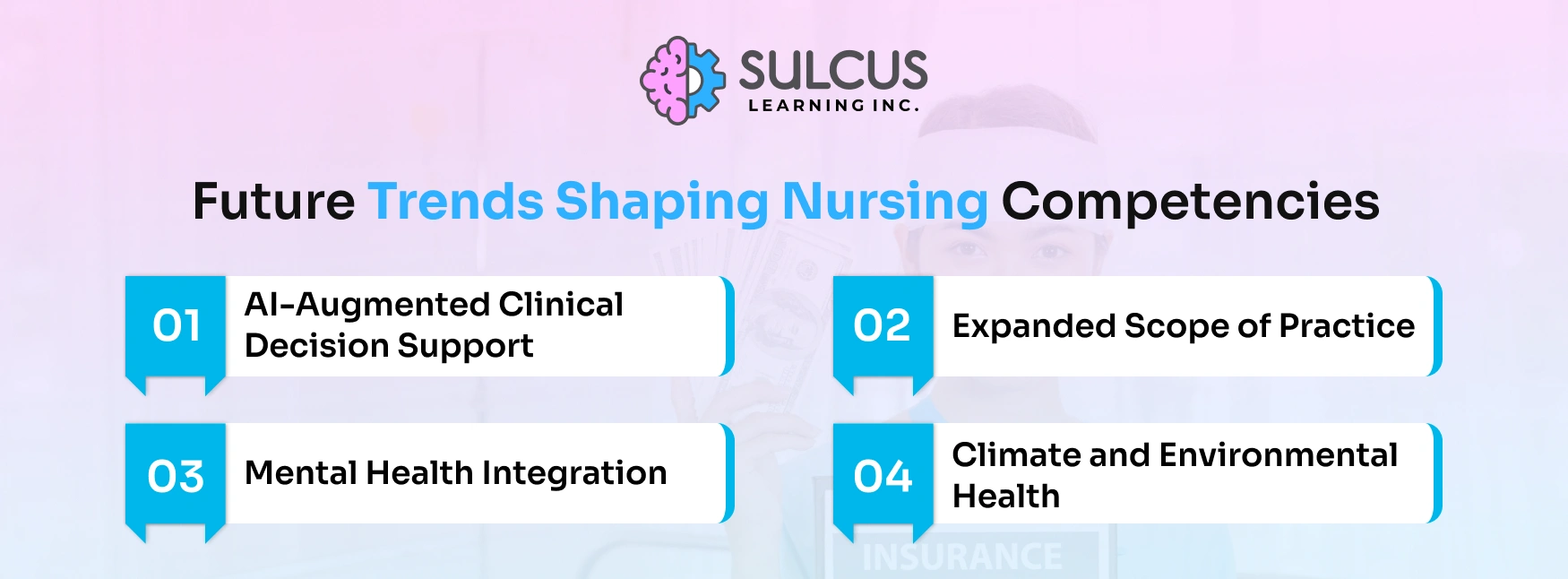
The nursing profession is evolving rapidly, and the competencies that define excellence are expanding alongside it. Looking ahead, several trends are reshaping what it means to be a skilled nurse in Canada:
- AI-Augmented Clinical Decision Support: Nurses will increasingly work alongside artificial intelligence tools that flag deteriorating clients, recommend interventions, and analyze large volumes of client data. The ability to critically evaluate these recommendations, rather than passively accept them, will be a defining competency.
- Expanded Scope of Practice: Nurse practitioners and advanced practice nurses are taking on increasingly complex roles in primary care, particularly in underserved rural and remote communities across Canada.
- Mental Health Integration: With growing recognition of the mental health burden in Canada, nurses in all settings are being asked to provide trauma-informed care and mental health first aid.
- Climate and Environmental Health: Extreme weather events are creating new population health challenges, and nurses will play a role in preparing communities and managing health impacts.
Conclusion
Clinical nursing skills cannot be treated as a checklist component of entering the workforce. Rather, they grow and expand with experiential learning, seeking to improve and reflect. For Canadian nursing students, the journey to becoming a nurse that is safe, effective, and compassionate is assertive yet highly gratifying.
Those skills discussed in this guide are integral for the development of an effective and excellent nurse. Client assessment and medication safety lead the charge, as does clinical judgment and the colloquial and empathetic communication style.
The support that Canadian nursing students need to become confident in their practice and ready for their board exams already exists in the form of Sulcus learning, which houses exam-tailored, adaptive learning, and competency analytics tools.
Many candidates also review current NCLEX pass rates to benchmark their preparation and identify realistic expectations before exam day. Your investment today in your clinical skills will undeniably positively impact you, your profession, and your clients in your future.
FAQ’s
Q1. What are the most important clinical nursing skills?
Ans. The most important clinical nursing skills include patient assessment, medication safety, communication, clinical judgment, infection control, documentation, prioritization, and time management, helping nurses deliver safe, accurate, and patient-centered healthcare services daily.
Q2. Why are communication skills important in nursing?
Ans. Communication skills help nurses coordinate care, reduce medical errors, improve patient understanding, strengthen interdisciplinary collaboration, build therapeutic relationships, and support better patient outcomes across hospitals, clinics, community healthcare, and long-term care environments.
Q3. How can nurses improve their clinical skills?
Ans. Nurses improve clinical skills through continuous learning, simulation training, practical experience, evidence-based education, mentorship, mock exams, reflective practice, and competency analytics platforms that identify strengths, weaknesses, and performance improvement opportunities effectively.
Q4. What technical skills should nurses master?
Ans. Nurses should master patient assessment, IV therapy, wound care, catheterization, medication administration, oxygen therapy, infection control, blood glucose monitoring, emergency response, and electronic health record documentation to ensure safe clinical practice daily.
Q5. Which nursing skills are most in demand today?
Ans. Healthcare employers increasingly seek nurses with clinical judgment, digital health literacy, communication, cultural competence, chronic disease management, teamwork, adaptability, patient-centered care, and strong assessment skills across modern healthcare and community-based settings.

Harry Sagar
Harry is a strategic leader at Sulcus Learning, developing exam-aligned learning solutions. With expertise in adaptive testing and clinical education, he supports learners in achieving confidence, competence, and readiness.